Members: Login | Register | Member List

Avid Ddeal
Avid Ddeal

Stunning Good Looks

by Art Adams

rssicon

Saturday, May 10, 2008

The Debut: Wii Spec Spot, shot on RED, now online at PVC

Wii Spec Spot, 1k version

Here it is, finally finished. Phew! Now I know why I’m not in post production. I’ll write a blog entry on my stupid post mistakes later; for now, enjoy!

Details that may be interesting to the reader:

Shot 4k 2:1

Edited in 2k on Final Cut Pro

Redcode 36

Color correction applied to RedLog-exported footage from RedCine, using Colorista

Zeiss Ultra Primes, mostly at T2

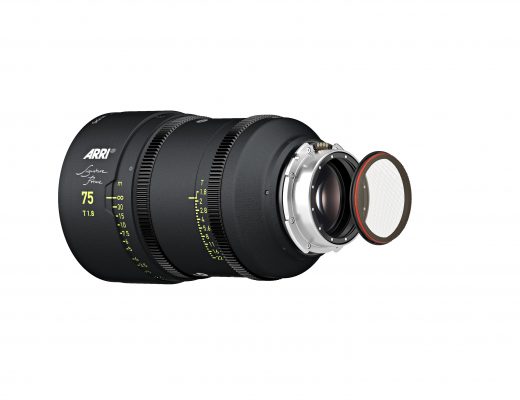
Schneider True-Cut IR filter used on every shot except for the TV (16mm Ultra Prime saw some off-angle cyan vignetting)

All shots daylight- or 4500k-balanced (the TV had to be shot under a daylight balance, for proper color, so I shot everything else daylight for consistency) except for the ceiling shot, which was done at 3200k to keep the light bulbs from going too warm

There’s one shot that was done on a Lensbaby. See if you can pick it out.

More soon.

CamerasLightingProduction • (1) Comments • Most recent comments by: david winters, • Permalink

Friday, May 02, 2008

My first RED shoot: The training wheels come off!

Okay, I have to admit it: I now like this camera more than I thought I would.

more »

CamerasLightingProduction • (2) Comments • Most recent comments by: Luc Meisel, Ian Hylands, • Permalink

Tuesday, April 29, 2008

NAB Odds and Ends

I’m a bit late in writing this, but there are some NAB wonders that I want to blog about. I had all of one day to see the show, but I did see some pretty cool things. How can you not at NAB?

I spent Sunday through Tuesday working in the Element Labs (elementlabs.com) booth. I’ve been consulting on their lights for a little over a year now, helping them develop a broad-spectrum LED light for the motion picture industry. Most LED lights are made of single LEDs that appear to be white (although many skew slightly green) but if you look at the spectrum you’ll see a very sharp spike: they don’t emit much of the color spectrum. As you only get accurate color reproduction if you hit an object with light containing its color, you won’t get very accurate color from a narrow band light source.

Element Labs uses six LED (three each in two packages, alternating across the fixture) to create broad spectrum light. The mixture of LED colors provides for more accurate color response, and it also allows the fixture to change color temperature. The current spec allows for 2200k to 6500k, and it’s a very pretty quality of light.

Last year I worked with Element Labs to create a process shot in the booth. Their original product line consisted of large video wall displays, and several DP’s have used those video wall products to create traveling light for process shots. The idea is that you can hang the panels above a car on a green screen stage, and then play your background plate back across the video wall to create interactive lighting between the plate, which will be added in post, and the actors on the set. Last year we did exactly that, by creating a video wall that reflected in a Shelby Cobra that was parked in the booth. The model in the car was lit with earlier versions of the LED light that we’ve been developing, and the display was a huge hit. This year we scaled down to a motorcycle without a model, so the display was a bit less dramatic but it was still fairly pretty.

The great thing about working a booth for several days is that people come find you. I got visits from a lot of people I know through CML (cinematography.net) as well as a Panavision rep and the president of my IA local.

My free day was reasonably well planned out. My first stop was over at Schneider Optics, to visit Bob Zupka and see their new IR cut filter for the RED. We had a long talk about the complexities of filtering, which once again proved to me that I frequently have no idea how much I don’t know, and then he gave me a prototype of the IR filter for testing. Bob has a theory that IR reduction in the RED may improve the overall MTF of the system, increasing resolution noticeably. Adam Wilt and I are going to do that test on Thursday.

I then visited a local producer, Luke Seerveld (seerveldmedia.com) who was working a booth for a company called Prompter People (http://www.prompterpeople.com/). They specialize in making cheap but useable gear for the production industry. Is a $500 tripod a good buy? In this case, yes--it’s not an O’Connor or a Sachtler but it was darned good for a cheap tripod. They make LED lighting units that are decent--not great, they’re a bit green and spiky, but decent--for very little money. Add 1/4 minus green and your good to go for most purposes. They’re probably not great on color rendition but they’ll work for a number of less critical applications.

I stopped off at a couple of other locations before making my way to Tiffen to see their IR filter. I spoke with one person who was in sales and didn’t know much about the IR filter, but she pointed out the gentleman I should talk to and I waited patiently while he helped someone who was obviously new to the business understand the basics of filters. He recognized my name from an article draft I’d recently sent over (I wrote an article on HD filtration for a future issue of HD Video Pro that I sent over to Tiffen for vetting) but continued to spend a lot of time demonstrating consumer camera support tools to the person ahead of me. After waiting 20-30 minutes I gave up and left.

I met up with fellow DP and rental house owner John Chater (chatercamera.com) at the Tiffen booth and we walked over to BandPro (http://www.bandprodigital.com) to see the Sony F35. I really like the external design of the camera, and I was amazed at the latitude I saw in the image. Looking across the aisle into the Sony booth I was able to see deeper into shadows than I could by eye.

I’ve learned that a good way to analyze a camera’s limitations is to look at highlights, as well as bokeh, to see what happens when the sensor and optics are pushed to their limits. In this case I noticed two things:

(1) Highlights flare vertically, much like an IT chip would, but much softer. It’s not a nasty streak, but a soft and visible flare--almost like anamorphic flare, only not predominantly blue and not horizontal. The design of the chip is rather interesting: instead of a Bayer pattern or three chips around a prism, the pixels are laid out in stripes: two stripes of red, of green, and of blue, repeating left-to-right across the sensor. In post the pixel strips are shifted over on top of each other for full color. When I first heard of this scheme I was worried that horizontal resolution would be compromised, but it’s not--apparently the chip is over-populated with pixels by something like 40% more than it needs.

(0) Comments • • Permalink

Saturday, April 12, 2008

Find me at NAB, part 2

I just received my April copy of HD Video Pro magazine, and there on page 54 is my write-up of Element Labs LED lighting technology for the film industry. When I’m not writing here, or shooting somewhere, I’m writing for HD Video Pro. It’s turning out to be a great magazine, and I’m quite pleased to be a regular contributor. I’m losing track of what’s running when these days, but future issues will see articles I’ve written on the Lensbaby 3GPL (Lensbabies.com), the Sony EX-1, and a truly massive article on diffusion filters for use in HD (thanks to Ira Tiffen, formerly of Tiffen, Inc., and Bob Zupka of Schneider Optics.)

I’m in the Element Labs booth from Sunday through Tuesday (elementlabs.com/nab.html) giving product demos and such, but Wednesday I’ll be off on my own. I’m definitely planning on visiting Iridas, the subject of one of my earlier articles, to see their new color grading system for raw Bayer-pattern workflows, and Schneider Optics, to see their new-for-HD UV and IR cutting filter. Beyond that… well, I’ll just try to see as many cool things as I can before I have to jump on a plane Wednesday night.

I’ll be at the Digital Cinema Society Party Monday night, and the Cinematography Mailing List Party Tuesday night, so look for an incredibly handsome man with impeccable hair and the fashion sense of a Vanderbilt. I’ll be the squat graying guy just behind him.

Meanwhile, stay tuned to PVC for lots of NAB action. I don’t know that I’ll be able to post much while I’m working the booth, but I hope to have a few things to report from my jaunt on Wednesday.

NAB 08 • (1) Comments • Most recent comments by: sam pardue, • Permalink

Saturday, April 12, 2008

Find Me at NAB

For a bit over a year now I’ve been consulting on a new broad-spectrum LED light for the motion picture industry. The idea is that this light, with six different LEDs, can change color temperate with a simple turn of a knob and dim without changing color temperature. The spectrum on this light is much better than current LED lighting products that use only one LED.

In order to see an object’s color accurately you have to light it with light containing that same color. Single LED lights typically use phosphor-based LEDs, which have a little spectral spread to them but not much. They only produce a very narrow range of colored light, so they are good an illuminating but not good at all for color reproduction. The Element Labs Kelvin Tile (the product I’ve been working on) has one phosphor and five dye LEDs mixed together, creating a much broader color palette.

I’ll be working the Element Labs booth at NAB, so come find me if you have a chance. Sunday I’ll be setting up, and Monday/Tuesday I’ll be giving product demos and showing off the new Kelvin Tile “paintbox” control system. Wednesday I’ll be wandering NAB in search of juicy new products.

Here’s where I’ll be:

http://elementlabs.com/nab.html

Come on by and say hi!

LightingNAB 08 • (0) Comments • • Permalink

Friday, April 11, 2008

RED Build 15 EI Tests

RED ONE Build 15 EI Test

The idea behind this test was to underexpose a neutral reference and see at what point the RED’s noise becomes too much of an issue. Using Colorista in Final Cut Pro, I put 18% gray at 50 units on the waveform monitor for each exposure, effectively “printing up” each exposure to see how much “grain” (noise) showed up. Some of this is exaggerated by compression artifacts, but I think you can get a good feel for what’s going on.

I’m not sure how this would look on a film out, but to me there isn’t a ton of difference between noise levels at 320 and 640, although I think I’m more comfortable rating the camera at 320. I start seeing reduced contrast at EI 1280, which I really wouldn’t want to try on a paid job.

Compressed via FCP Compressor, H.264.

CamerasPost Production • (0) Comments • • Permalink

Page 1 of 4 pages  1 2 3 >  Last »

Stunning Good Looks by Art Adams

Art AdamsArt Adams A native of Northern California, Art Adams spent ten years in LA--first at film school (Loyola Marymount) and then working in the film industry. He started out as a camera assistant on low budget features and worked his way into spots, music videos, features, sitcoms and episodic television shows. He transitioned from assistant to operator to DP by the time he returned to the San Francisco Bay Area in 1993.

Currently Art focuses his energies on shooting spots and high end corporate productions, as well as special venue and blue/green screen projects. He likes jobs that make his brain hurt with ingenuity and cleverness. He has been published in HD Video Pro, American Cinematographer, Camera Operator Magazine and Film/Tape World.

Total Training Online Software Training - Try it Now Get Free Access

Total Training Online Software Training - Try it Now Get Free Access

rssicon

Camera Talk

by Adam Wilt and Art Adams

Discussing RED, uncensoRED

rssicon

Ripple Training

by Steve Martin, Brian Gary & Mark Spencer