

Filmtools
Filmmakers go-to destination for pre-production, production & post production equipment!
Shop NowThe Real Scoop on What the RED ONE and Canon 5D Are Really Good For

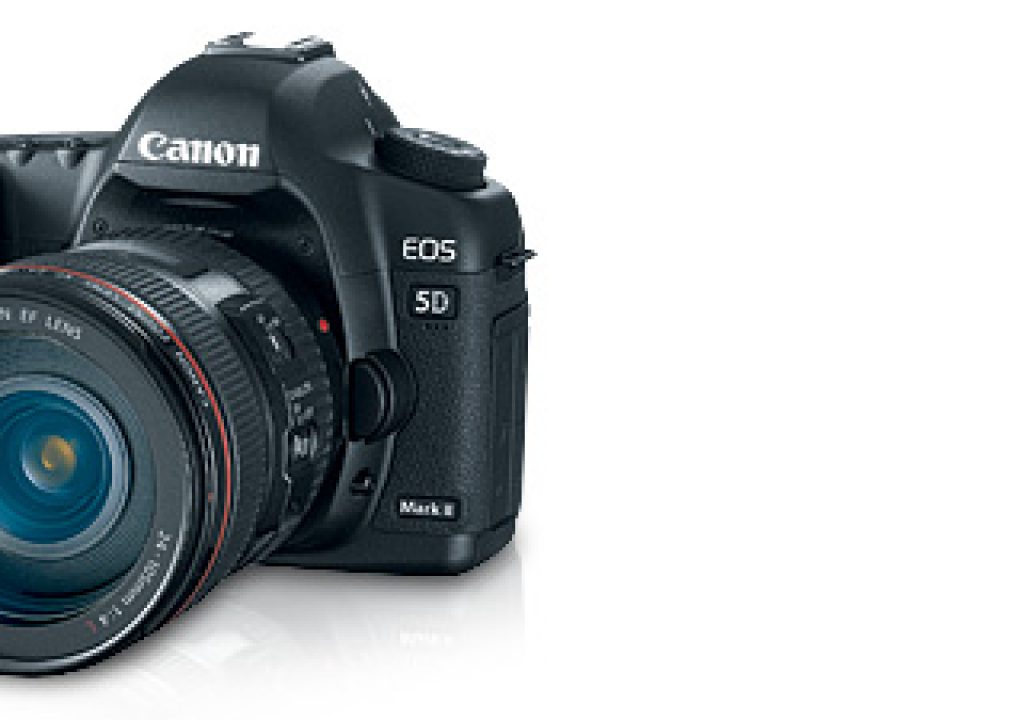
Banking, real estate and the stock market: all three are prone to “irrational exuberance.” As it turns out, the production community is not immune either, witnessed by the hordes rushing to buy (or wishing they already owned) a RED camera or a Canon 5D mkII. Mind you, both are excellent tools – but neither is a cure for everything.
The Tulip Mania of the early 1600’s saw the contract price of a single tulip bulb exceed ten times the annual income of a skilled craftsman, and is widely considered to be the first speculative bubble. The late 1990’s saw the astronomical rise of Internet stocks, heralded by the CEO of Amazon.com as a paradigm shift wherein the purpose of a company was no longer to make a profit. After that horrific crash we set ourselves up for an even bigger catastrophe: the real estate bubble.
In each case average human beings jumped on the bandwagon of fast and sure riches, only to find the brakes didn’t work as the wagon went off a cliff. As mentioned above, the media production industry is seemingly no different, as witnessed by REDmania in 2007 and 2008 and now Canon 5D Mark II mania in 2009.
Each camera has its strengths and weaknesses, and neither is the greatest camera ever. And yet RED has created for itself a product image that has seen 4,000 RED ONE’s fly off the shelves. The Canon 5D has sold approximately 40,000 units with a further 17,000 on backorder.
It’s important to recognize that the biggest advantage of either of these cameras is its price, and as both cameras are reasonably affordable compared to their higher-end brethren it is quite alluring to think that they are equally as good.
In some ways they are, and in some ways they aren’t. Read on…
THE RED ONE
Recently I was contacted by a production company in New York City who were looking for a local DP. “We want to shoot 120 fps on the RED in front of green screen,” they said.
As I’m a relatively honest fellow, I felt I had to raise a technical point. “120 fps on the RED is fine. Green screen on the RED, no problem. BUT–you don’t want to mix them.” I explained why, and I told them that if they’d tell me about their workflow I’d find another method to get what they were looking for at or below their current budget.
“Excellent! We’ll get back to you soon,” they said, and then they hung up and dialed a line producer of my acquaintance. “Give us a list of DP’s in your area who know the RED.”
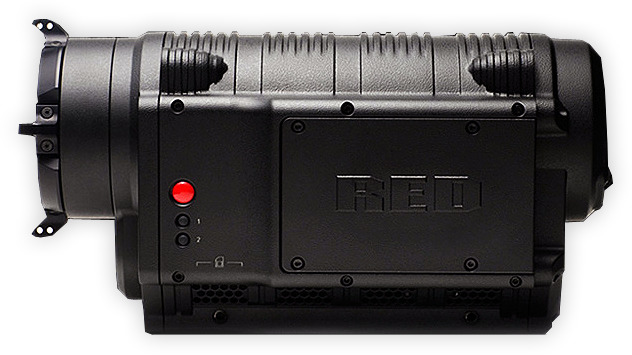
Jim Jannard is a master of marketing. He made billions of dollars selling sunglasses, and he’s a genius at making people want his products. Unfortunately he did too good a job with the RED, because I occasionally find myself in the position of telling a production company that the RED won’t meet their needs… and they believe the marketing rather than the DP. While the RED is certainly the best $17,500 camera ever, it is not the best all-around camera in existence.
WHAT IT’S GOOD FOR
The camera has very high resolution. It utilizes a 4k sensor, although as it uses a Bayer filter sensor the real resolution is only between 2.8k and 3.2k, depending on the quality of the lens used, due to loss of detail during the demosaicing process. That’s more than enough resolution for film output, and that detail has convinced many that simply owning this camera will allow them to open their own studio.
To some extent they may be right. RED has certainly brought film resolution HD to the masses. Whether the masses have the lenses and support equipment to actually use their RED cameras is another matter entirely. The important thing is that the promise is there.
The RED revolutionized another aspect of HD production: it was designed from the ground up to function “film style.” The captured images are intended to be color corrected later, adding a world of possibilities to the final look. I know two directors who love working this way as there is no engineering station to cart around during production and no waiting to tweak each shot with a paintbox. We just shoot. We work faster, actors remain fresher, and we can finalize the look of the end product in a proper viewing environment instead of under a tent of flags in the middle of a park in broad daylight.
When one considers that the RED has brought to the masses a film-like workflow and style of shooting, it truly is a revolution unto itself.
WHAT IT’S BAD FOR
The bottom line is that it’s still a $17,500 camera, and you don’t make a 4k film resolution camera at that price point without cutting a few corners.
The sensor is slow. RED says to rate it at ISO 320, but a lot of DP’s find that it works better at 160-200. It’s very hard to calculate an ISO rating for an electronic imaging system as ISO is based upon the toe of the film exposure curve, and HD doesn’t have a toe: HD gamma is a straight line down into the murk of noise. Still, setting a light meter between 160-250 seems to work for most people, depending on taste and comfort with noise.
The sensor only offers about nine stops of usable latitude before noise overwhelms the shadows. The RED often looks like it has more latitude because it’s easy to protect for the highlights and open up the mid-tones in post as long as you don’t open them up too far. The great benefit of the RED’s workflow is that those nine stops can be pushed around later in post, while ordinary cameras “bake in” the look to such an extent that you are largely locked into whatever look you create in the field.
The RED is not very sensitive to blue. It’s native white balance is 5000k, and under blueish 5600k light it captures a full nine stops of dynamic range. Under tungsten light, though, the blue channel is starved for exposure, as there just isn’t that much blue in tungsten light. Most HD cameras hide this weakness by boosting the blue channel gain, which is why the blue channel always looks noisy when viewed on a high quality studio monitor, although most cameras seem to be more sensitive to blue than the RED. Equally annoying is that the tungsten channel is overexposed under tungsten light: objects containing red will clip sooner under tungsten light, limiting the camera’s dynamic range to about 7.5 stops.
Adding blue to the lights or in front of the lens will ameliorate this problem somewhat, reducing blue channel noise and increasing red channel latitude, but at the expense of reduced overall exposure sensitivity.
The RED’s entry-level software is bug-ridden and inconsistent, at least at the moment. For example, the new RED ONE camera software build, no. 20, appears to largely eliminate blue channel noise under tungsten light as well as improve Rec 709 color rendition, but only if used with the current version of RedAlert. RedAlert is design to process one clip at a time, although the underlying engine can be used to process batched of clips using an included command-line tool called RedLine. RedLine, though, doesn’t allow for color correction.
RED’s free batch color correction tool, RedCine, has not yet been updated to work with the new build 20 colorimetry as it is maintained by a completely separate group from those who implemented the new colorimetry in the camera software and RedAlert. A new version of RedCine is due to be released soon, but meanwhile… you can get a taste of the new look, but you can’t use it very easily. If you can’t afford $100k+ for Scratch or SpeedGrade then your options are occasionally limited.
At high speeds the RED utilizes a smaller portion of the sensor in order to pull the image data off fast enough. As the effective size of the sensor decreases, though, resolution drops dramatically. The true resolution of 2k RED footage is probably closer to 1.5k, so at 1.9k (1920×1080) it’s not going to look terribly sharp. In a lot of situations that may be okay, and some post sharpening may solve the problem acceptably. It other cases, such as shooting in front of green screen, that softness may be a deal killer as it will make matte edges look a bit unreal.
The RED may be difficult to color correct if you desire bright, saturated colors. Anecdotal evidence suggests that RED footage will take a bit longer to tweak in the color correction. I can speak from personal experience when I say that some colors, such as purples and oranges, may not translate well without a lot of secondary work.
None of the viewing outputs are truly accurate. The monitoring output is 720p only, which makes critical viewing of a 4k image awkward at best. The image always looks better on a computer, though, so when in doubt it’s best to pull the hard drive off the camera and open a clip up in RedCine or RedAlert. A lot of picture oddities, such as weird color shifts and moire patterns, disappear when viewing the image on a computer display. Not being able to monitor accurately is a mixed blessing, as once you realize you can’t truly see what you’re doing, but that the image you’re capturing always looks better later, it’s easier to step away from the monitor and just shoot.
The RED is not a documentary camera. Its handheld ergonomics are appalling, and it’s very difficult to judge focus through the viewfinder. What might look sharp at the time may not look okay on a 40′ wide screen. It’s not a good camera for following an unpredictable subject handheld and under low light.
SUMMARY
The RED functions best in a traditional film-style shoot environment, with a camera assistant following focus, a fair bit of light, and a data-wrangling station nearby. This isn’t a bad thing at all: the fact that we can shoot HD film-style inexpensively is a blessing that the larger, more established camera companies weren’t going to give us any time soon. But the RED is still a $17,500 camera–so don’t expect it to do everything. What it does do, it does very well indeed–but it is not the last camera you will ever need or use.
And now, the Canon 5D…
THE CANON 5D
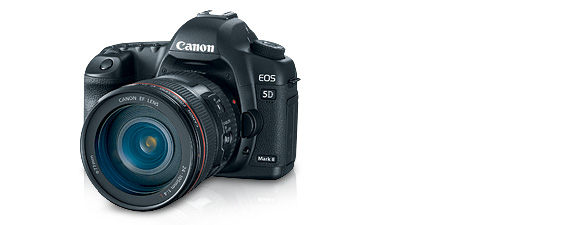
The Canon 5D was built as a response to a request by Associated Press and Reuters, who were trying to cut costs by having one person shoot both stills and video of an event. They mandated that the 5D’s movie mode be fully automatic, as they didn’t want to scare still photographers off of using it, and they dictated a frame rate of 30 fps for web streaming.
Once it became clear that the motion picture community wanted to use this new tool for professional production work, Canon released an update that offered a manual exposure mode. There are third party hacks that offer zebras and other exposure tools, but I’ve not had the opportunity to try them yet.
Like RED, there are cries amongst some in the production community that this is the only camera you’ll ever need to create phenomenal money-making projects. Well… maybe. While it’s possible to create art with virtually any tool, professional production tools require the virtues of reliability, predictability and telemetry: cameras have to work, they have to work the same way all the time, and they have to tell you what they’re doing. That last part is where the 5D falls short.
WHAT IT’S GOOD FOR
The 5D creates excellent HD images for a small, cheap camera. The price, more than any other factor, is what’s driving 5D-mania right now: for US$2,600 you can buy a camera body that will deliver full 1920×1080 HD using a single 35mm-sized sensor. And the sensor is actually slightly bigger than a 35mm film frame, which means that motion picture lenses would vignette if they were mounted on this camera.
It’s very sensitive under low light, making it ideal for natural light cinematography. It’s inexpensive, making it a great crash camera. It fits into an established line of accessories, making it cost effective for those who already own Canon gear.
While the camera doesn’t offer any critical exposure telemetry (zebras, histograms) in movie mode, the LCD is accurate enough to judge coarse exposure and contrast. It’s necessary to roll through the F-stops in order to see if a highlight is clipping, but what you see is darned close to what you’ll get.
If you need a small HD camera with 35mm depth of field that doesn’t attract a lot of attention, this may be the camera for you.
WHAT IT’S NOT GOOD FOR
Following focus. Canon DSLR lenses are designed for action photography, which relies heavily on autofocus. Autofocus is not so good for motion picture photography, and it’s not enabled in movie mode anyway. You can focus before rolling, but once the camera is recording it will not try to adjust focus for you.
And you can’t adjust it very easily yourself. The manual focus ring on a Canon autofocus lens is not attached mechanically to anything. It relays data to a servo, making it nearly impossible to retain physical focus marks. Also, the lens focus markings themselves are small and very close together, making it impossible to reliably hit a mark twice.
The same is somewhat true of manual focus still lenses. They were never designed to be focused by tape measure, so the markings are rough estimates and not reliable at all. The markings are also packed so close together that being off by less than a millimeter can result in a completely soft shot.
It’s nearly impossible to see critical focus on the camera’s low-res LCD screen. There is a zoom function that does show image detail pixel for pixel, but you can’t use that while rolling. And besides, by the time you see that the shot is out of focus it’s too late.
Zacuto has solved a lot of the ergonomic problems of handholding the 5D for long periods of time, but their sunshade solution for the LCD is far from perfect. It is mounted using Velcro and tends to slip, and it’s hard to tell whether the black frame line that you’re looking at is the edge of the LCD or the inside of the sunshade that is now blocking part of the image. The sunshade magnification is also too high, which is great for judging focus but not so good for being able to see the entire frame at once. You have to scan the frame constantly to see all of it, and it’s easy to miss the tiny record indicator at the top right edge of the frame.
The camera records 8-bit variable bit rate H.264. H.264 is an excellent codec, but 8-bit color reduces how much the data can be massaged in post before banding occurs. I found that this camera’s footage requires some color correction because its eight stops of latitude forced me to protect highlights more than I wanted to. It’s necessary to use UDMA CF cards to ensure that the camera can write data fast enough to avoid severe bit rate-constrained compression artifacts. The camera also likes being held level, as too many diagonal lines may cause additional compression artifacts.
The camera shoots at 30 fps, not 29.97. Make sure your sound person knows this if you’re shooting double-system sound.
Before using a matte box and filters with this camera be sure you’ve acquired or manufactured donuts for every lens you plan to use. Still lenses are much smaller than film lenses and most of the pre-made cine donuts don’t work satisfactorily, resulting in a lot of wasted time and paper tape.
SUMMARY
This camera makes great images, but imaging power alone does not a great camera make. A truly usable production camera must conform somewhat to the process of filmmaking, and this camera isn’t quite there yet. Which is not a surprise, as it was never really meant for professional filmmaking.
For the price it can’t be beat, and the pictures speak for themselves. But this isn’t really a follow-critical-focus set-critical-exposure great-exposure-latitude camera. Within its limits it works extremely, but don’t expect to shoot your next full feature on it. At least not easily.
Art Adams is a DP who believes that the person behind the camera makes more difference than the camera itself. His website is at www.artadams.net.