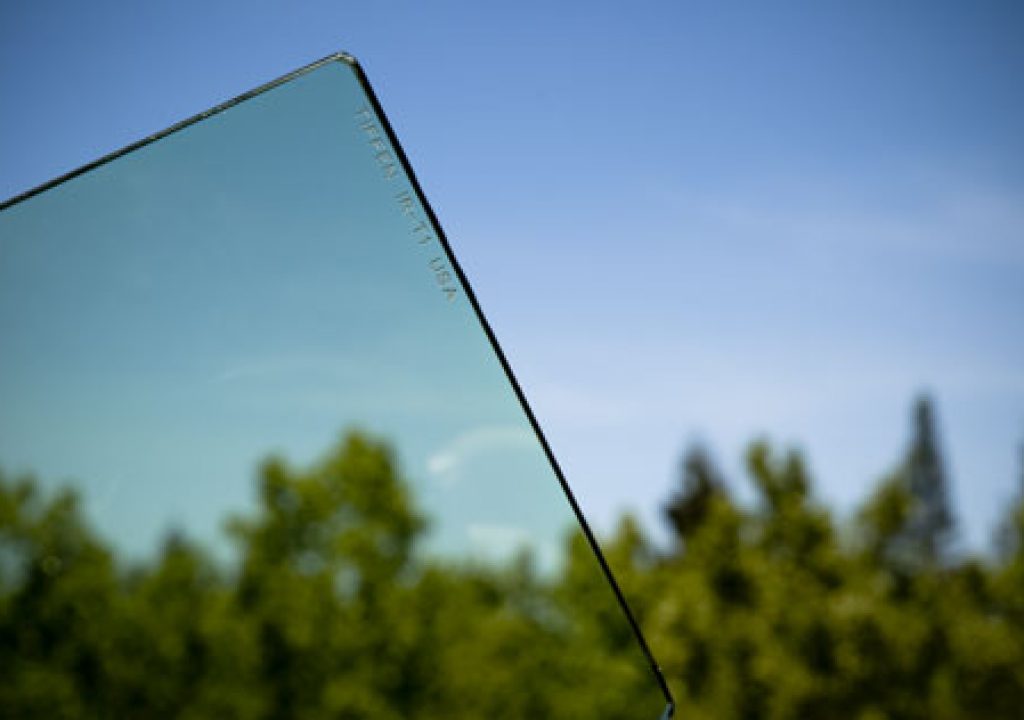
Crisp clean blacks, and only a half-stop light loss, make this new filter a winner

The broadband dyes used in the Sony F35, EX1 and EX3 sensors work wonderfully well in most regards. They allow us to capture subtle hues of color that electronic cameras have not been able to capture in the past. Unfortunately this comes at a price: the red dye passes a little too much light at the edge of the visible spectrum, so the cameras see red in some places where our eyes don’t.
I’ve written before about how silicon sensors are most sensitive to infrared (heat) energy. To ensure that the sensor sees the world the way people do, every sensor has a “hot mirror,” or dichroic filter, to reflect and reject the invisible wavelengths of light and leave the visible wavelengths of light free to pass through to the sensor.
Additional IR filtration is necessary because the on-sensor hot mirrors don’t always cut enough IR to keep the image free of IR contamination, especially when using neutral density filters. Neutral density filters reduce the amount of visible light hitting the sensor but don’t block invisible light, which then fools the sensor into seeing light that, to our eyes, isn’t there.
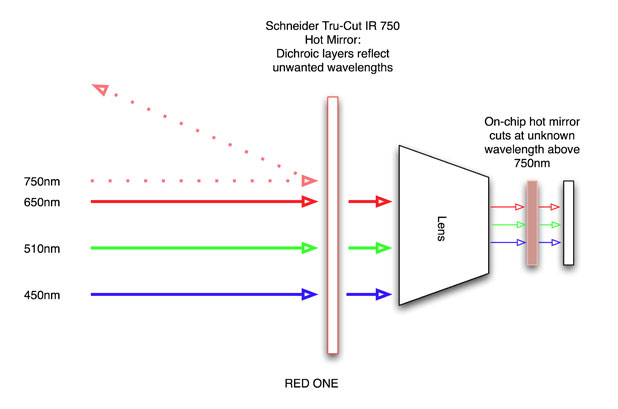
Some cameras, like the RED, have hot mirrors that work well under normal circumstances but fail to cut enough IR when neutral density is added. Because the problem lies in the realm of invisible light it is necessary to use a hot mirror to eliminate it. Dichroic hot mirrors are very good at removing wavelengths of light that we can’t see.
Here’s an illustration of what causes IR contamination in daylight:
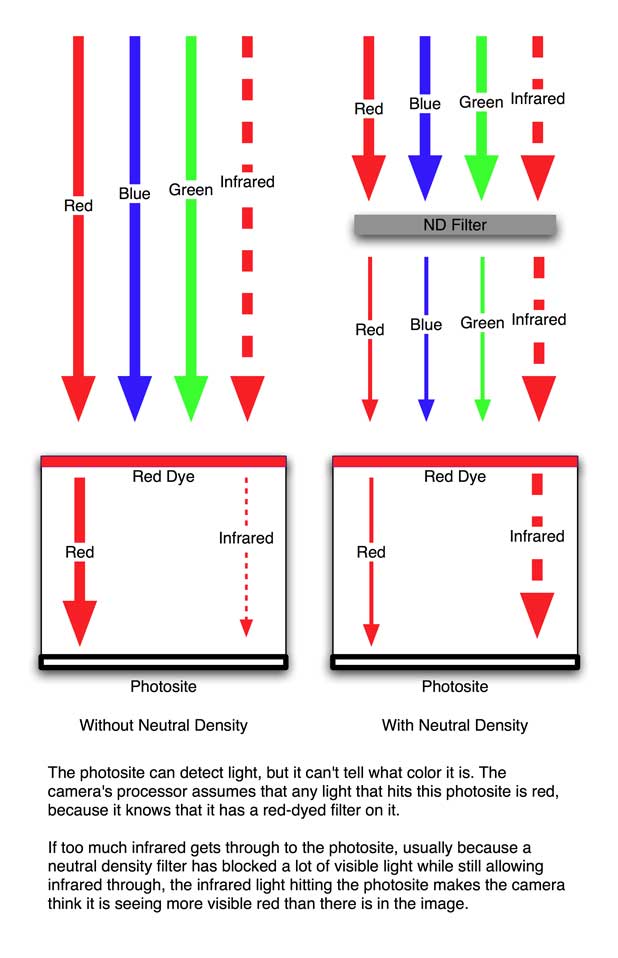
Under normal circumstances the small amount of IR that reaches the sensor makes no difference, but when the amount of visible light is cut without cutting IR as well then the camera sees red where there shouldn’t be any.
Dichroic hot mirrors reflect invisible light to prevent it from reaching the sensor:
The problem with Sony F35, EX1 and EX3 cameras is completely different. They have a very good hot mirror in front of the sensor, or chip block, that rejects all light wavelengths above 700nm. The issue instead seems to be with the broadband dyes that Sony uses on the sensors of their newer Cine Alta cameras. In the past, the red, green and blue sensor dyes passed only narrow wavelengths of light, and this limited the ability of cameras to see secondary colors. Up until only a few years ago it was very difficult to obtain accurate yellows, oranges, cyans and purples because the spectrum passed by the sensor dyes didn’t include any of these colors.
At NAB 2007 a friend asked an old-time video engineer, “Why did it take so long for the technology to advance to the point where broadband dyes became possible?” The answer was that the technology has existed for twenty years, but the NTSC spec was so limited that there was no point in trying to capture those colors because they could never be broadcast accurately. With the advent of digital cinema, in which subtlety of color is both possible and desirable, that has completely changed, and Sony has responded admirably.
But nothing comes for free. The good news is that the red channel sees more subtle hues of red than ever before, which on the surface is a good thing. The bad news is that this makes the camera more sensitive to “far red,” which is red light at the edge of visible light. Our eyes don’t see far red but the camera sees it very well indeed. Since the goal is to reproduce only the visible spectrum, and far red is invisible to our eyes, it looks a bit odd when it appears in a picture. And it can appear even when no filtration is being used at all.
It is possible to make a dichroic filter heavy enough to cut red down to around 680nm, which is where the problem seems to start, but the filter is so heavy that it’s impossible to use it with wide-angle lenses. Dichroic coatings look clear when viewed straight on but change color when viewed at an angle. Wide-angle lenses capture light right to the edges of the filter, and the angle of that light is sharp enough to cause a color shift.
Here’s what’s happening:
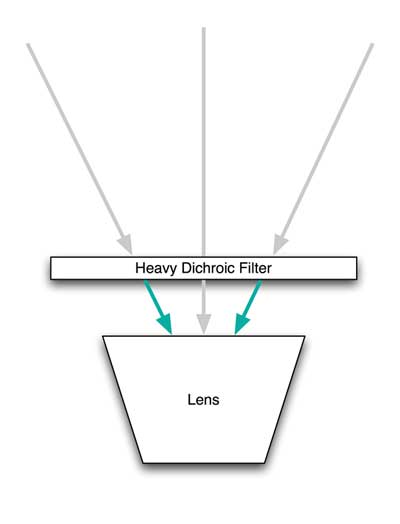
The green rays show the angles at which light will change color when passed by the filter. Here’s an example of what that looks like:
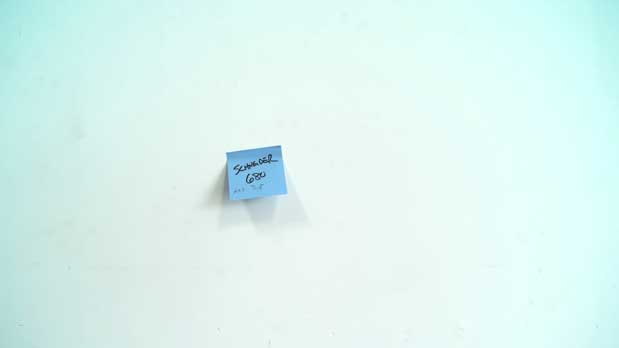
The filter used here is the Schneider Tru-Cut 680, a filter that (as best I know) has never been publicly released. It’s based on the wildly successful Schneider 486 filter, which was developed for early digital still cameras that were manufactured without a hot mirror. It’s a spectacularly effective filter when it comes to cutting IR and far red–nothing beats it!–but it can’t be used on wide lenses at all. The picture shows what happens if you use this filter on an EX1 zoomed all the way out to 5.8mm.
So we know that the issue with the Sony F35, EX1 and EX3 is not IR but far red, and we also know that dichroic filters that cut low enough to block far red are too heavy to use on wide-angle lenses. What’s the solution? More on page two…
In this article I wrote about Tiffen’s IR ND filters, which use a special dye to absorb far red without using a hot mirror. On the previous page we saw how hot mirrors reflect unwanted wavelengths of light, but those filters are the exception: every other filter works by absorbing light.
Filters work on the same principle that gives us color vision. When full-spectrum light hits a colored object, the part of the spectrum that IS NOT the object’s color is absorbed and disappears. The spectrum that does contain the color of the object is reflected, and that’s the color that our eyes see. In the filter world, light that is the color of the filter is passed and the other colors are absorbed. For example, in the case of an 85B filter, the orange cast of the filter passes mostly warm light (oranges and reds) and absorbs most of the blue, changing the balance of the light from 5600k to 3200k. It doesn’t absorb all the blue–the filter would have to be a much deeper color in order to do that–but it absorbs enough to reduce the amount of blue to a level that tungsten film would expect to see under tungsten light.
What Tiffen did was to find a colored dye that absorbs the far red part of the spectrum, between about 680nm to where the on-sensor hot mirror cuts at 700nm. Since it’s a dye filter the color doesn’t change when viewed off-angle, unlike dichroic filters, so it will never vignette. It can be used with any focal length lens without any issues at all. Until recently, however, Tiffen could only make that dye work in conjunction with neutral density filters. The dye is a greenish color, and the amount of green needed changed depending on the strength of the ND. If you used a heavy ND filter, the green dye had to be heavier to block more far red. If you used a lighter ND filter, less green was needed because less far red was being passed.
The problem is that the Sony F35, EX1 and EX3 could, under certain conditions, see far red WITHOUT any ND filtration at all. And Tiffen didn’t have a far red filter without built-in ND, so if you were shooting under tungsten light you’d have to take at least a one-stop light loss (by using a Tiffen IR ND .30 filter) if far red reared its ugly head.
Until now. Tiffen sent me a prototype filter that only costs a half-stop of light loss and seems to work very well indeed.
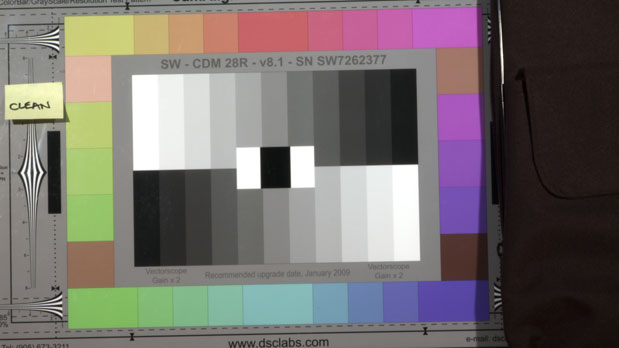
Here’s a DSC color chart placed next to my normal far red/IR reference: the DSC chart’s black polyester bag. As you can see, the bag looks a bit maroon on the EX1–but in reality it’s a deep black. The same sensor dye that gives us reds to die for is also making this black fabric look anything but black.
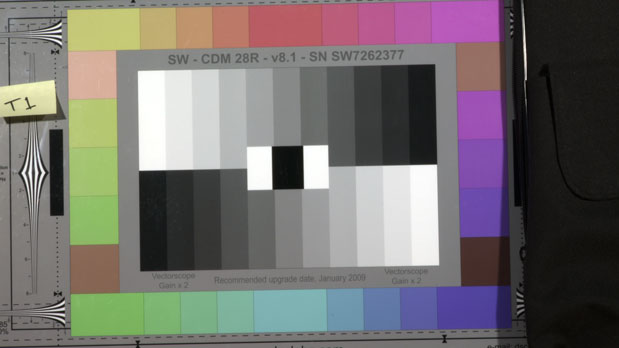
This is the same chart and bag but with the prototype Tiffen dye filter. (It was labeled “T1,” for “test one,” so while I labeled it that in the tests the filter’s actual name will be different when it is released in a month or so.) The black bag is now black again, and I’ve only lost 1/2 stop of light. I did have to white balance through the filter to remove the green cast, but once I did that all the colors seem to be dead on accurate.
Here’s a close-up of the bag with no filtration and with the blacks lifted to between 20 and 30 IRE:
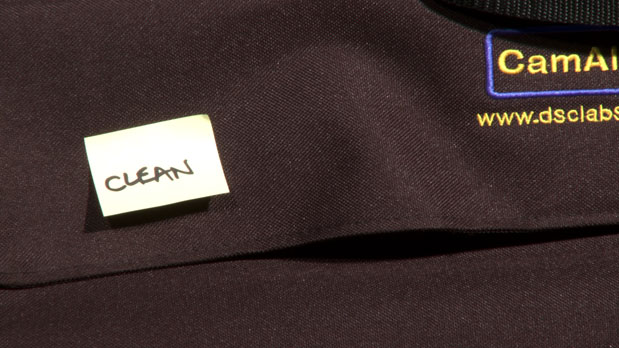
Blech. That’s not a good look. But if we add the Tiffen prototype dye filter, it looks like this:
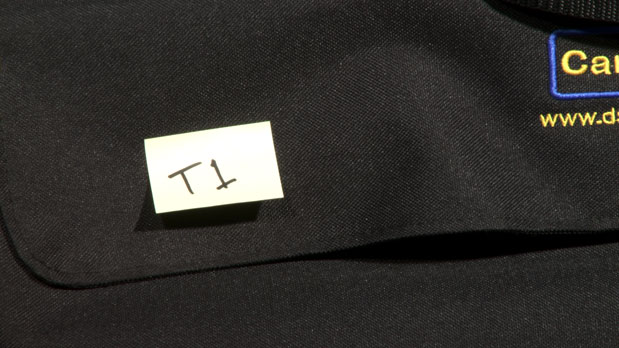
Yeah, that works. The bag is a nice rich black again.
And now let’s compare the Tiffen prototype to the gold standard, the Schneider Tru-Cut 680:
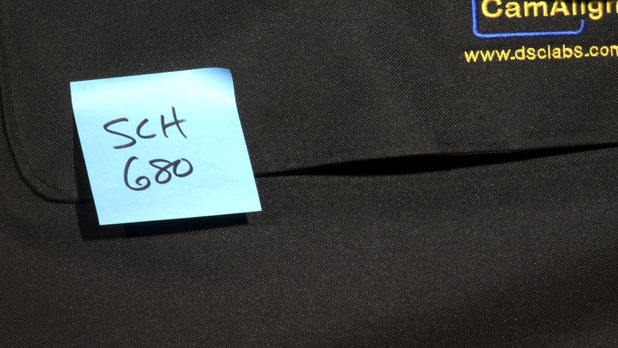
The Tiffen prototype filter cuts IR at least as well as the Schneider does. That’s very impressive, considering that the Schneider is a dichroic filter and the Tiffen prototype uses a light green dye.
There are a couple of important differences:
Good news: The Schneider Tru-Cut 680 can be stacked with any amount of ND.
Bad news: It vignettes cyan on lenses wider than “normal” perspective (for a 35mm film-sized sensor, about 50mm).
Good news: The Tiffen prototype cuts far red without any vignetting and at only a half-stop light loss.
Bad news: It can’t be combined with any ND, because the amount of green dye in the filter has to increase with the strength of the ND.
The next big question is this: does the Tiffen prototype cut any light that we want to keep? Does it cut the red end of the spectrum too much? Let’s take a look on page 3…
I shot the DSC chart full frame, both clean and with the Tiffen prototype filter. Here’s the clean version:
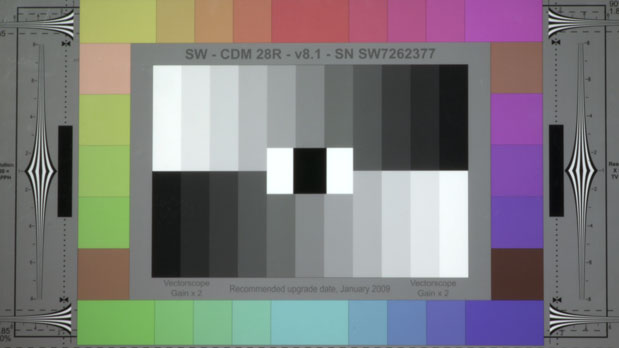
Here’s the version shot through the Tiffen prototype and white balanced:
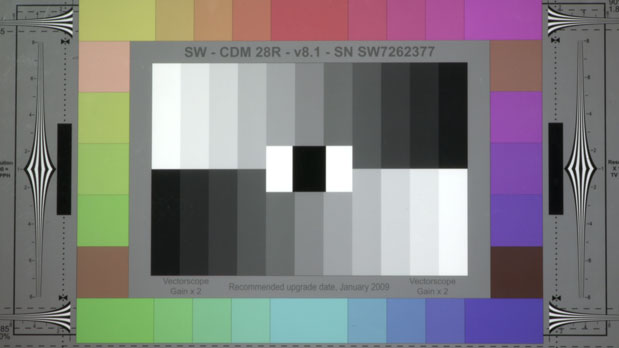
I can’t see any difference by eye, but that means nothing. The eye is extraordinarily easy to fool. We really need to compare how these charts look on a vectorscope and see if there are any color shifts. Here’s the clean chart:
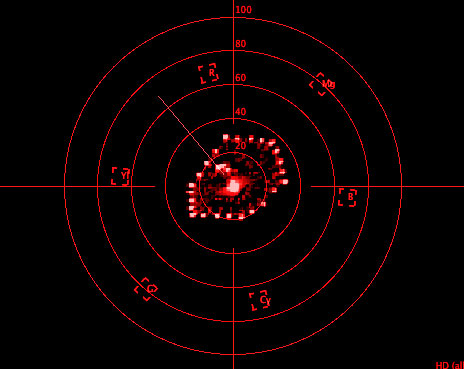
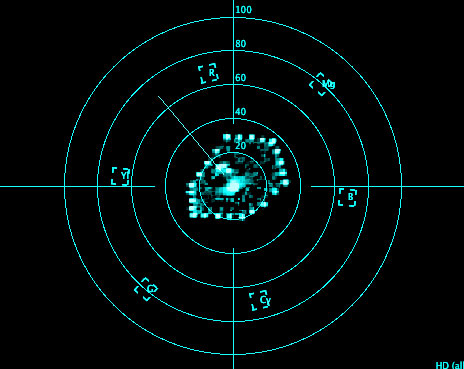
I artificially colored this screen grab for a reason. We’ll get to that in a moment. Here’s the chart with the Tiffen prototype in place and white balanced:
Now, if we take both those images and overlap them:
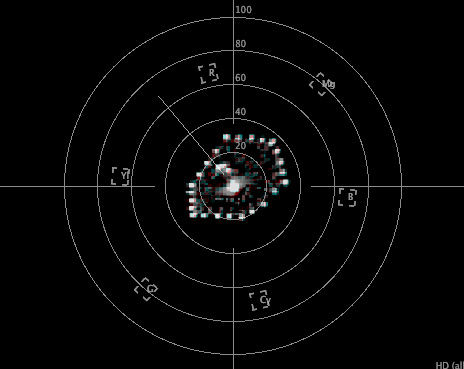
The images have been colored in exact opposite colors, with the clean chart made red and the filtered chart colored cyan. If the Tiffen prototype was cutting significantly into the red spectrum I’d expect to see the top of the cyan pattern pulling in toward center. I don’t see that here. There’s a whisper of a mismatch but I don’t see anything to worry about. The filter seems to cut exactly what it needs to and no more.
This was the first test prototype. Tiffen says they will be sending me another version to test soon. Their goal is to release this new filter in a month or so. If you own a Sony F35, EX1 or EX3 it’ll be well worth looking at.
Art Adams is a DP who tries to write clearly about technology, with very little filtration. His web site is at www.artadams.net.


Filmtools
Filmmakers go-to destination for pre-production, production & post production equipment!
Shop Now