
(Page 1 of 1 pages for this article )

Tuesday, November 17, 2009

Filed under: Production

Premiere Pro 4.2 & AVC-Intra

dhelmly aka DavTechTable | 11/17

Dave Helmly Video

image

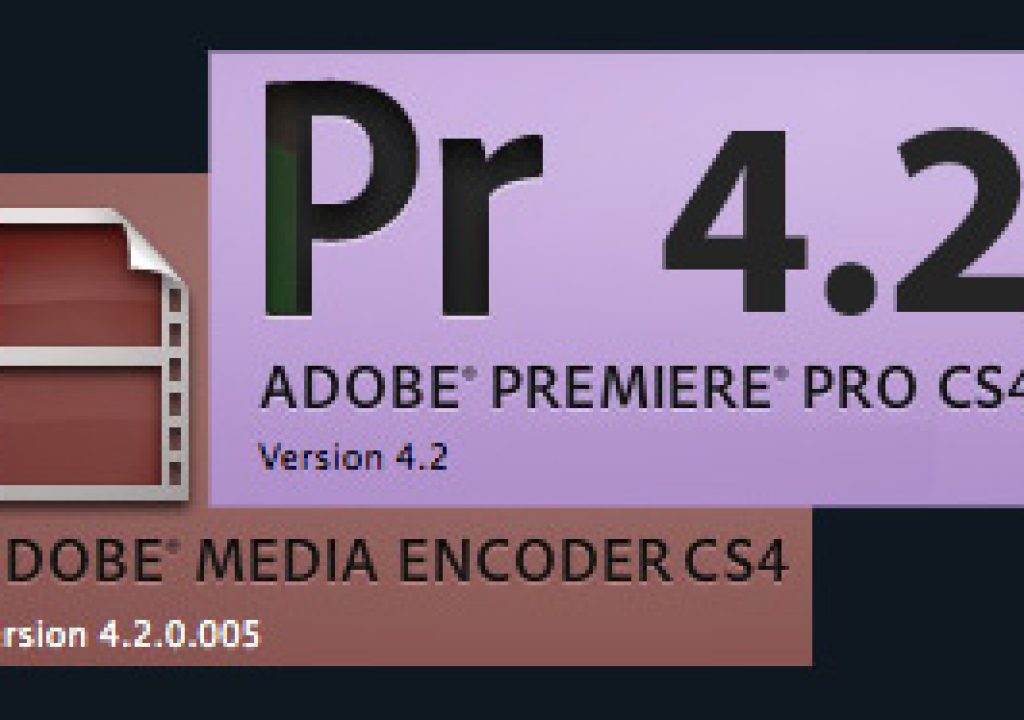
The new Premiere Pro CS4 4.2 and Adobe Media Encoder CS4 4.2 offer new improvements and enhancements to CS4 video workflows. With the 4.2 update, Premiere Pro now offers users of Panasonic’s AVC-Intra line of P2 cameras the chance to edit in native AVC-Intra format. This has been a longtime coming for AVC-Intra users and they can now enjoy the advantages of Adobe CS4 tapeless workflows and native editing. Several other enhancements to Premiere Pro 4.2 were also updated, like the support for Final Cut 7 import. I have outlined several of the updates and fixes below. I have also listed the “known issues” in 4.2 as well.

New in this release

  • Panasonic P2 AVC-Intra material is now supported; new sequence presets are also included for editing this format.

Notable fixes

  • Final Cut Pro Project Converter is now compatible with Final Cut Pro version 7
  • Final Cut Pro Project Converter now maintains timecodes from the originally captured sources from Final Cut Pro
  • Playback no longer stops when connecting/disconnecting a USB keyboard or mouse
  • Performance is no longer diminished in mixed format sequences during playback, scrubbing, and exporting
  • Fixed a field output issue when rendering a 720p 60/50 source in an interlaced SD sequence
  • Third-party support

Known issues

  • Use of Project Manager is not recommended for AVC-I since clip spanning is lost during project collect and copy
  • Clip duration in media browser does not match duration of clip once it is imported
  • AVC-I clips are redbar in native sequences
(Page 1 of 1 pages for this article )


You must be registered to comment. This is an effort to reduce spam. Please REGISTER HERE.

Nice addition.

Now if Premiere and AE would properly support all the Sony XDCAM HD codec bit rates and frame rates without having to pay for additional 3rd party plug ins.

I feel for the NLE folks having to keep up with so many different formats now - codecs, multiple frame rates, bit rates, progressive/interlaced, raster variants. I am sure it’s costly to keep up.

The XDCAM HD formats are very popular and widely in use.

Posted by lightprism  on  11/18  at  08:59 AM


Under “Known Issues” by “AVI-I clips are redbar in native sequences” I assume you mean they need to be rendered. So we’re still not there yet in having realtime editing natively in PPro.

To lightprism:

I’ve been a fan of Cineform’s intermediate CODEC which takes care of this problem quite well. Yeah it’s 750.00,US for Prospect HD, on top of the cost of your NLE. But boy do I find that cost to be some of the best money I’ve ever spent.

It would be a huge and expensive undertaking for Adobe to create their own intermediate CODEC to handle this without the need for one by Cineform. And that’s what we’re talking about: some editing CODEC that can do what PPro cannot do using the camera’s native CODEC.

Many people seem to have a lot of internal resistance to an intermediate CODEC, saying: “Why do I have to pay all that money for a third-party intermediate CODEC.” “Why can’t PPro do it ‘natively’?. 

People need to understand that what is a technologically great CODEC for a camera’s acquistion, is anything but great for working in post. Cineform’s CODEC is vasttly different in that is a waveform based scheme and allows working on even 4k film editing on a laptop without proxies.

Editing HDV was made possible in PPRo by virtue of the fact that Adobe licensed Cineform’s CODEC. Users didn’t have to pay extra in that case so they never really knew or complained about “the extra cost. Adobe is not a CODEC developer.

Adobe license all CODECs. Adobe is really a user interface and core-usability developer of a product that can handle plugins. They do it well and make it all pretty much transparent to the user - once a plugin is paid for and installed that is.

Posted by wsmith  on  11/19  at  09:42 AM


Agreed that Cineform is one fine product and actually much more than I was suggesting.

The problem is one of competitiveness. When the other major competitors such as Final Cut Pro, Grass Valley Edius both of which fully support XDCAM HD 422 and Avid to a limited extent, all without having to buy plug-ins, Premiere and AE are not really competitive. There are many Premiere editors and producers using Sony XDCAM HD and Convergent Design XDR and Nano Flash recorders who are stuck when it comes to Premiere and AE.

But I and many others would totally agree with your assessment of Cineform being well worth the money and because it does sooooo much more than just get Premiere up to speed with their competitors.

For those in need of immediate XDCAM HD support and don’t want to spend the money for Cineform, there is a lesser cost MainConcept plug in for Premiere - but have heard it doesn’t plug into AE.

Bottom line - other competitor’s NLE’s have this support without paid 3rd party plug-ins.

Posted by lightprism  on  11/19  at  10:43 AM


Hi lightprism,

I’m not really keeping track of those competing product costs. I’m all Windows and see no compelling reason to switch to FCP nowadays.

That’s because I do an increasing amount of corporate work and so far those corps all want to ‘bring it in-house’ and get away from me as soon as they can. So far, they’ve all been on a Windows network infrastructure, not Mac. 

As for Adobe, I just don’t think the other players can match Adobe’s tight integration (and I don’t use that term loosly in this case…) with Photoshop, AE, etc.

And as long as Photoshop and AE are the 800 lbs gorillas in the room, they’re fighting a losing battle, in my personal opinion (incorrect sometimes but humble it rarely is…)

Then re Cineform. I’m able to work with FCP users quite well with Cineform as an intermediate CODEC. Does ProRes allow that without hoops of fire? As I said, not really going there so far so I don’t know the answer there. I so think that’s a major question to consider if considering FCP/ProRes.

Then there’s Cineform’s being there for me quickly when nobody else was. examples: I had a big corp project using Sony EX1 cams when they just began shipping. Nobody was supporting the format, natively or othrwise, except Cineform, right away. Same thing with the Canon 5D Mark II: Cineform was there for me right away when nobody else was. The next great new cam that hits the streets will also probably not have an immediate solution other than Cineform.

I have no idea how well ProRes will do the same for it’s user when a new compelling camera hit the streets next time. Do those users simply download an upgraded, compatible version of it into their existing FCP installations? How long did it take ProRes to support the EXI or Mark 5 II D?

There are financial costs, and then there are workflow related time costs.

By the way, Cineform now has an external recorder device. I think it’s rather quite costly and I haven’t needed it thus far but maybe the future will see other lower cost external record solutions using Cineform’s CODEC. I hope so.

Posted by wsmith  on  11/19  at  11:48 AM


Oh, re my previous post, I forgot something.

I’ve not personally worked with Red footage but who was there right way for with a usable workflow solution for those users? That’s right, Cineform.

Posted by wsmith  on  11/19  at  12:23 PM


We already agreed that Cineform is a wonderful 3rd party plug-in.

Regarding the discussions of which NLE tool is better - that’s not the issue. They are all fine tools and which is most useful and comfortable for any given editor is a personal choice. The Adobe Suite has a ton of strengths and many advantages. As for the “800 pound gorrilla in the room”, when it comes to market share, Avid and Final Cut are the gorrillas.

As for going back and forth between platforms and NLE’s, Cineform is wonderful. One can also go uncompressed, but with larger files as the negative. I do not use ProRes much as I am able to edit natively with XDCAM HD422 in either FCP or Edius on the PC side. I have CS3 and used Premiere since 4.0 but have not used it much for many years as I found Edius/hardware suited my speed needs. Added FCP when I started collaborating with Indies. I wished I had the time to stay up with Adobe and add Avid to the tool kit.

FCP, via a free Sony plug-in can now import MXF wrapped files. I believe that would tip the interoperability scale in their favor.

On the PC side, Edius has had the broadest format support for quite some time. Since Grass Valley purchased Edius and the business of Canopus, Edius has been rapidly growing in the news production world.

Getting back to the article and issue discussed, format support, FCP-Avid-Edius-Sony Vegas all support Sony XDCAM HD422 without the purchase of a 3rd party plug-in. Adobe does not without 3rd party plug-ins from MainConcept, Cineform, and others I believe. But it does now support AVC-I. XDCAM HD is a far more prevalent format.

Posted by lightprism  on  11/20  at  09:04 AM


Hi lightprism,

When I used the term “800 lbs gorilla” I refer to to AE and Photoshop even more so. It looks like there’s no compelling app that is ever going to supplant Photoshop or AE which is a video version of it. The user base is extremely entrenched for Photoshop.   

When I can make a change in in Photoshop and see it also happen, automatically in PPro or AE on another screen, that’s overwhemingly compelling, to me at least.

I understand that Avid is firmly entrenched in Hollywood and TV production but I have to be honest. I am not even aware of whatever it is that Avid can do that PPro or FCP cannot - other than get me a job editing in Hollywood. None of the sites I haunt have explained another rationale to me.

How long did it take for FCP, Avid, Edius, Vegas, etc to begin supporting Sony XDCAM? I suppose Sony Vegas did without delay because Sony makes the cameras. But not many pros people find Vegas compelling.

I have no idea how good FCP’s color correction is. Iis it non-destructive? Cineform Firstlight non-destructive color correction could be another compelling reason to use it.

Cineform doesn’t do uncompressed since Uncompressed needs no tool. You are no doubt referring to Cineform Raw. Cineform’s is wavelet based and is frame by fram, rather than macro-block based. Its highest quality mode is 100mbps and, as you may know is practically indistinguishable from uncompressed.

Using it’s own processing pipeline rather than PPro’s it makes the installed graphics card/subsystem superfluous and irrelevant; it doesn’t use it for processing at all. Having 4-6 streams of HD on a realtime timeline without giving a hoot about what graphic card is installed is magnificent.

I understand that Cineform is working on a mathematically-lossless technology. Now that should really wake a lot of people up.

I’ve alread been a convert since taking the time to read their site ‘cover-cover, word-for-word’ and then giving it a spin on a big mission-critical project. I sometimes take chances but I did research it and it was the only thing supporting the PMW-EX1’s when they hit the street.  At the time, those cams’ images, their card based acquisition, and file based ingest were the overriding attractions.

I probably seem like a shill for Cineform but I’m not. I do like to evangelize superior technologies.

Posted by wsmith  on  11/20  at  11:37 AM


Name:

Email:

Location:

URL:

Smileys

Remember my personal information

Notify me of follow-up comments?

Submit the word you see below:


10 Final Cut Pro things FCP editors might be missing in Adobe Premiere Pro CS6
Scott Simmons | 05/11

These are a few of the things that I found myself searching for as I’ve been moving over to Premiere Pro CS6 as a FCP 7 replacement

image

Adobe is making a big play for Final Cut Pro users with their CS6 release of Premiere Pro. It’s vastly improved over the Premiere Pro of old and is a lot like Final…

NAB 2012: Cameras & Lenses
Adam Wilt | 05/02

A brief sampling of interesting photographic tools at NAB.

I’ve already covered the basics of what Sony and Panasonic announced, as well as looking at Canon’s…

Overshadowed at NAB
Mark Spencer | 05/01

3 interesting products that passed under the radar

image

While I was once again teaching at Post|Production World at NAB this year, with classes every day, I did manage to make it to the show floor a few times. Since the…


Disclosure, to comply with the FTC’s rules 16 CFR Part 255 This article was either written by Adobe employees or for Adobe by an outside contractor. It is intended for the Adobe Channel on ProVideo Coalition, which Adobe sponsors.


Copyright © 2012, HD Expo, LLC a division of Diversified Business Communications. DBA Createasphere

All rights reserved. HD EXPO, High Def EXPO, Createasphere, E-Tech, Entertainment Technology Exposition, 3D Production Workshop, VariCamp, P2 Camp, ColorCamp 101, and Lighting, Filters & Gels for HD are all trademarks of HD Expo, LLC.

Terms of Use  |  Privacy Policy

Check PageRank