Click Here

(Page 1 of 1 pages for this article )

Monday, April 05, 2010

Filed under: *VIDEO*EditingHardwarePost Production

Will Adobe’s new Mercury technology provoke a sudden exodus from Final Cut Pro to CS5?

Allan Tépper | 04/05

Will Mercury be kryptonite for Final Cut Studio sales?

image

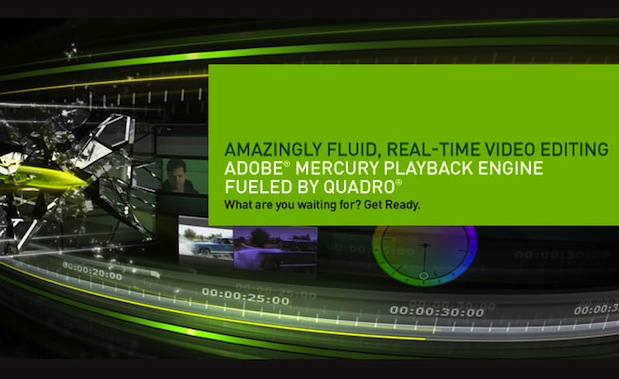
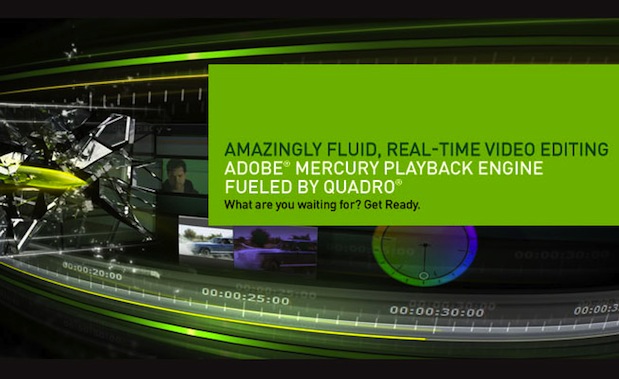
As has already been covered by Chris and Trish Meyer and other colleagues at ProVideo Coalition, Adobe’s new Mercury technology will be officially announced on April 12th, at the start of NAB 2010. Anyone who has seen a Mercury demonstration knows that it is quite impressive, and may attract a large number of Final Cut Pro users to “jump ship” and switch to CS5 when released. At the crux of the compelling features is not only that Premiere CS5 can natively edit long-GOP H.264 (i.e. raw footage from Canon 5D MKII, Canon 7D, and recent Kodak & Sanyo cameras) with real time transitions, and that of AVCHD camcorders —which also use the long-GOP H.264 códec (including very recent professional models from both Panasonic and Sony). I say “not only” because even Premiere CS4 has been able to do that. The big difference is that Premiere CS5 can do it easily and gracefully… even with several layers. especially (but not exclusively) when it has a supported GPU. As you can tell, for someone who would like to edit that raw footage natively and in real time, Adobe’s Mercury technology is potentially kryptonite for Apple’s continuing sales of Final Cut Studio. Of course, there is a possibility that Apple will shock us at NAB time with announcement of a new version of Final Cut Pro that will finally take advantage of MacOS 10.6’s (Snow Leopard’s) OpenCL-facilitating technology. That is properly spelled, and stands for Open Computing Language. It is also possible that one of the professional interface manufacturers (AJA, Blackmagic, Matrox, or MOTU) will announce a way for their hardware to assist FCP to accomplish the same via OpenCL… or some other technology.

About OpenCL

Here is some background about OpenCL, courtesy of Wikipedia:

OpenCL (Open Computing Language) is a framework for writing programs that execute across heterogeneous platforms consisting of CPUs, GPUs, and other processors. OpenCL includes a language (based on C99) for writing kernels (functions that execute on OpenCL devices), plus APIs that are used to define and then control the platforms. OpenCL provides parallel computing using task-based and data-based parallelism. Its architecture shares a range of computational interfaces with two competitors, NVidia’s Compute Unified Device Architecture and Microsoft’s DirectCompute.

OpenCL gives any application access to the Graphical Processing Unit for non-graphical computing. The GPU had previously been available for graphical applications only. The GPU memory would be available to the operating system and or applications essentially as faster system memory than the main system memory. Thus, OpenCL extends the power of the Graphical Processing Unit beyond graphics (General-purpose computing on graphics processing units). OpenCL is analogous to the open industry standards OpenGL and OpenAL, for 3D graphics and computer audio, respectively. OpenCL is managed by the non-profit technology consortium Khronos Group.

OpenCL was initially developed by Apple Inc., which holds trademark rights, and refined into an initial proposal in collaboration with technical teams at AMD, IBM, Intel, and Nvidia. Apple submitted this initial proposal to the Khronos Group. On June 16, 2008 the Khronos Compute Working Group was formed with representatives from CPU, GPU, embedded-processor, and software companies. This group worked for five months to finish the technical details of the specification for OpenCL 1.0 by November 18, 2008. This technical specification was reviewed by the Khronos members and approved for public release on December 8, 2008.

Some readers may be asking: “What about ATI? Aren’t they involved with OpenCL too?” Well, ATI was purchased by (or merged with) AMD back in 2006. That’s why there is reference to AMD in the above paragraph, rather than to ATI.

According to Apple:

“Snow Leopard further extends support for modern hardware with Open Computing Language (OpenCL), which lets any application tap into the vast gigaflops of GPU computing power previously available only to graphics applications. OpenCL is based on the C programming language and has been proposed as an open standard.”

Ever since the launch of MacOS 10.6 (Snow Leopard), we’ve been waiting for FCP to support OpenCL.

Hardware issues and a potentially difficult decision for FCP users who may consider CS5

Fortunately, all of the professional interfaces I know for the Mac —from AJA, Blackmagic, Matrox, and MOTU— will work fine with both FCP and Adobe. There may be some new drivers released shortly after CS5 is shipped, since this is a common occurrence.  That’s the good news. However, the GPU issue is much more uncertain. Fortunately, Adobe has already published its recommended GPUs for Mercury. Check out this page at Adobe, at the bottom where it says: If you’re interested in upgrading your system today, the following graphics cards are supported by the Mercury Playback Engine. I am linking to it rather than listing the cards here, since Adobe will be updating the list as new appropriate cards are released.

However, since Apple hasn’t yet a released a version of FCP that supports OpenCL, we don’t know yet which GPU cards Apple will support. Ideally, a user would want to invest in a new GPU that will continue to work with both if at all possible. Hopefully, there will be a common denominator among supported hardware. That’s why I really hope that Apple will at least announce such details around the time of NAB 2010, even if Apple chooses not to show the new version yet. Apparently, Apple’s engineers have been concentrating on the iPad, but hopefully they can take a short break just to announce their roadmap for Final Cut Pro (and Final Cut Studio in general)… as long as Apple desires to continue developing those products. If for some reason, Apple no longer plans to pursue that, the honorable thing would be to inform the public about it ASAP.

Opinions from some friends who edit with Final Cut Pro

Over the past few months, I have conversed with friends who edit with Final Cut Pro. So far, about 80% of them say that they will await patiently until Apple adds OpenCL support. The other 20% were quite open to the idea of changing. Their only concern was the issue raised above: making a significant investment in a GPU replacement without being sure that it will work Final Cut Studio, both during the transition, and as a fallback. Of course, they know that they could re-install the old GPU if necessary, but that would be an undesirable hassle.

Please participate in my survey

Obviously, my casual conversations with about 10 friends does not make a scientific survey. That’s why your are very welcome to comment below. Please state whether you are an FCP editor, and whether you would consider switching to CS5 due to Mercury’s benefits, whether you would not, and why in either case.

Allan Tépper’s articles and seminars

Get a full index of Allan Tépper’s articles and upcoming seminars and webinars at AllanTepper.com. Listen to his radio program TecnoTur, together with Rubén Abruña, Vanessa Brown, Tanya Castañeda, and Liliana Marín, free via iTunes or at TecnoTur.us. Very soon you will also be able to hear TecnoTur in English, plus two new programs from the TecnoTur network, one in Castilian and the other in English.

Disclosure, to comply with the FTC’s new rules

None of the manufacturers listed in this article is paying Allan Tépper or TecnoTur LLC specifically to write this article. Some of them have sent him software for review. Some of the manufacturers listed above have contracted Tépper and/or TecnoTur LLC to carry out consulting and/or translations/localizations/transcreations. At the date of the publication of this article, none of the manufacturers listed above are sponsors of ProVideo Coalition magazine or of the TecnoTur programs.

(Page 1 of 1 pages for this article )


You must be registered to comment. This is an effort to reduce spam. Please REGISTER HERE.

Premiere Pro and FCP are so similar in operation that I think FCP editors can pick it up with relative ease. I’m going to try and use PPro CS5 for all my 7D stuff. I will be encouraging clients who are becoming frustrated with FCP to do the same .... If they don’t want to try Avid Media Composer. I fear the Creative Suite price might keep some away. And then there’s the Apple / FCP fanboys who wouldn’t switch editors if you gave them a better option for free. That’s probably the biggest hurdle to get FCP editors to try PPro CS5.

Posted by Scott Simmons  on  04/05  at  09:57 AM


As a long-time Premiere editor, it will be interesting what happens with FCStudio this NAB.  When Adobe re-inserted PPro for Mac into the Creative Suite, I was initially puzzled…but now I get it, with bells on.

Posted by .(JavaScript must be enabled to view this email address)  on  04/05  at  03:02 PM


As a long, LONG time Premiere Pro editor, I finally switched to FCP after CS4 made me declare, “I’m made as hell and not going to take it anymore” after the umpteenth crash of the day. Bottom line, FCP is simply more stable than Premiere day in and day out during long edit sessions. Adobe CS4 bugs and glitches abound - not only in Premiere, but Encore and After Effects as well. FCP Studio may have some minor annoyances, but failure to perform reliably is not one of them. Adobe has a long history of promising esoteric wonderful new technology that, when you’re in the trenches, never seems to quite work as promised.

Posted by .(JavaScript must be enabled to view this email address)  on  04/05  at  08:34 PM


If Apple decides it doesn’t need to sell any Mac Pros, then they’ll stop developing Pro Apps.

Until that time, they will slowly but surely develop a competitive product for post prod work.

Having the largest (and most cracked) install base has really slowed the development of FCS.  And it’s made Avid and Adobe much better competition.

I’m all for using both CS5 and FCS3 until one of them has the full feature set of the other for post prod.  Right now Adobe doesn’t have a killer color app for video (not AE!) and Apple’s FCP doesn’t have the equivalent to a Mercury Playback Engine, nor does Apple have a great Compositor (Motion is good for certain things but not nearly as powerful as AE.)

So until one of them has “all” the necessary tools, I say use both on a decent GFX card.  And yes, I know CS5 is optimized for Nvidia Quatro vs FCS’s optimization for ATI.  But the NVidia’s work well for in FCP and are “useable” in other FCS apps for the most part.

Posted by .(JavaScript must be enabled to view this email address)  on  04/05  at  09:07 PM


My first NLE was Premier Pro that came with the Matrox RT-2000 analog capture card. This was before digital camcorders were affordable. I built a killer dual Athlon-CPU Windows system. I think I was able to edit one project on this unstable system. I always blamed Windows as the unstable element, not Premier.

Long story short ... I switched to Apple FCS once I got a digital camera and all has worked fairly will since. (I still love the look of that Canon L2. It sits on the shelf like a trophy now.)

Stability is much more important than features to me. I am considering switching back to Premier if FCS continues to lag. But not before I’ve seen many posts about how stable PP is on Windows 7-64.

So tell me more about PP stability. Inquiring minds want to know.

Posted by Rob  on  04/06  at  01:09 PM


I’ve already spent thousands of dollars on a full Mac pro system. I have already pushed myself to a full apple FCP workflow, I go for what’s most streamline and stable. I started editing young on PP, then learned FCP, then went to Avid, and realized FCP was more economical than Avid even though I liked editing on it better.

Bottom line, I’ve also had some pretty bad crashes with PP Cs4, and Cuda/Mercury is optimized for NVIDIA. It puts me in a difficult position because most or all Apple ProApps are ATI optimized. IE. Motion, and I believe Color. Two programs I use very often.

I’m probably going to get CS5 just for 64 bit photoshop and AE, as for PP, I probably won’t use it much unless certain factors are fixed.

Media Encoder, clunky.
PP: Unstable, Also still a tad clunky but easy to get used to.
Unified hardware support. Either Nvidia, or ATI, or both. This kind of stuff is gonna go back and forth for a eternity, next FCP will probably come out with 64 bit support super engine plus epic black hole inducing ATI support.

Sometimes you just have to stick to what works, cause by the time your done re adjusting yourself and reconfiguring, and all the money is spent, something else will be out.

Posted by Thomas Wong  on  04/07  at  04:27 PM


As a CS5 beta tester here in Norway…
There are going to be a lot of very surprised people out there regarding CS5 features and its stability.

Exciting times ahead for video editors.

Posted by .(JavaScript must be enabled to view this email address)  on  04/08  at  01:53 PM


I’m another beta tester and I have to say that I totally understand the need for stability over new whiz-bang effects. And I’m happy to say that you’ll be very pleased that Adobe has listened to it’s customer base and made CS5 VERY stable! And for studios like ours that are using DSLR cameras as their primary footage, you will be blown away with being able to edit in real time, color correct, etc then output with fast exports using the nVidia CUDA cards. Seriously folks…no more transcoding DSLR footage to a different format, or working with footage that barely plays back.

I don’t understand all the technobabble about OpenCL, etc. nor do I know if CS5 will make people abandon their Macs and FCP. But I do know that Adobe is taking Premiere very seriously, they have listened to our concerns and they want to make a kick ass product that works. I have been very vocal about needing real-time DSLR editing, and now I have it. I’m blown away and I wouldn’t be surprised to see Mac users that have DSLRs make a switch.

Posted by LauraRandall  on  04/08  at  02:54 PM


Thank everyone for their comments.
Laura:
Thanks for your comments too! I just want to clarify that switching from FCP to Premiere CS5 does not require abandoning the Mac, since CS5 will also be available for Mac, and there are Adobe-approved CUDA cards for Mac too.

Allan Tépper

Posted by Allan Tépper  on  04/08  at  03:02 PM


Just goes to show that I’m a PC girl! LOL!! smile

Posted by LauraRandall  on  04/08  at  03:05 PM


I’m another beta tester and I can confirm what reported by my collegues. I want just to say you I was dreaming this release since the 4.2 (1997’s version not the 2009 pro). Believe me Premiere CS5 is a milestone in all the adobe premiere history!!!!!!

Posted by davide pepe  on  04/08  at  03:10 PM


I’m a final cut editor as well, but I’d have no problem switching - I use Premiere CS4 sometimes and learned to edit on Premiere 5.1, not to even mention after effects integration - the only thing that really keeps me from switching is that I’ve gotten so used to my customized keyboard layout in Final Cut that I’ve gotten quite fast with it - and it doesn’t translate to Premiere (uses the number pad keys for many functions, and last i checked those weren’t customizable in Premiere CS4 without a modifier key).

But if CS5 offers that big a speed boost I’d have to give it a serious look, especially since I’ll have it once I update the Production Suite.

Being an Nvidia user anyway (on both mac and PC) this isn’t an issue - I’ve been looking for a reason to upgrade my 8800GT and well you won’t have to try too hard to convince me smile

Posted by .(JavaScript must be enabled to view this email address)  on  04/09  at  11:21 AM


@ Scott: Adobe has a reference guide that can help you map your FCP keyboard to Premiere. This document is referring to CS4 but shouldn’t change when CS5 ships. Check out page 14 & 15 to help you out. http://www.adobe.com/products/creativesuite/production/openworkflows/pdfs/AdobePrpProforFCPUsersReferenceGuide.pdf

We will update this document when Premiere Pro CS5 ships.

Posted by Michelle Gallina  on  04/09  at  12:26 PM


Hi thanks Michelle - what I meant was that I use (for example) the 7, and keys on the numeric keypad for insert and overlay edits respectively, but while I can program the keys, the keypad keys are “reserved” for typing in timecode. I can use SHIFT-NUM7 and SHIFT-NUM8, but not just NUM7 and NUM8—at least this was the last time I checked (and was confirmed by Adobe support).

If I’m wrong, I’ll be more than happy to hear it though smile

Posted by .(JavaScript must be enabled to view this email address)  on  04/09  at  12:29 PM


Oh, let me check on that, Scott.

Posted by Michelle Gallina  on  04/09  at  12:46 PM


@ Scott: For CS5, we will have a preference in the keyboard setting that allows you to use FCP 7 keyboard commands.

Posted by Michelle Gallina  on  04/09  at  02:12 PM


Regardless of the warm reception here, the proof will be whether countless professional FCP editors are willing to convert hours of native FCP ProRes resources. I am skeptical whether many will willingly abandon an application so familiar to them and risk a platform that has a less than stellar record and MUCH smaller user base. For pro users, there had better be amazing results with XDCAM and RED workflows otherwise Adobe will remain a distant third after Avid and FCP.

Posted by .(JavaScript must be enabled to view this email address)  on  04/09  at  02:26 PM


As an FCP editor myself, and a very big fan of the pro res workflow, I think I’m just gonna test the waters with CS5 first before i make my final decisions. See how a cineform PP workflow ends up, or even pro res in PP. and see how much flexibility i get in the interface, along with how i can integrate FCP and color with it too. It should be a interesting year, I don’t discount it if it will make my life easier, but as long as post houses and small to large companies stick with FCP and AVID as their primary edit suites, it maybe still be difficult for me to give up a industry integrated NLE that could potentially get me more work.

Let’s see how much of a standard and precetent PP and Adobe finally set. They did it for the still photography world, they did it for the VFX world, now their challenge is in the Video world.

Posted by Thomas Wong  on  04/09  at  02:42 PM


@Michelle - thanks for that but I’m still confused. My FCP 7 keyboard settings are also custom - they are not the default or standard keyboard shortcuts that come with FCP. The trouble I was having was matching my custom FCP settings to a custom Premiere setup. The only keys that were not mappable that I needed were the numeric keypad keys. I was told they were only for punching in timecodes to jump to that time.

If this has changed, I’ll be a happy camper - but I understand that I’m probably in the minority (of 1 even?) that considers this a necessity - I’m just so used to my personal settings, and I carry they around on my flash drive!

Allan - hope you don’t mind my mini-hijack of your comments area smile

Posted by .(JavaScript must be enabled to view this email address)  on  04/09  at  02:47 PM


My take on CS5:

I have been a tester for Adobe since 6.5 and I have to say without a doubt that this is the best version I have eveer worked with.  Much faster, I can’t begin to say how much more stable with short “and” longer format projects, and all around a much more sound and developed product.  I have to admit that after CS4, I was a bit let down because to me it was not as stable.  I have to be honest.  But CS5 is going to shock many!  I know it has me! 

This time, it is more about performance and stability versus bells and whistles(which for me, is most important).  It allows you to do what you need to do in a faster and more “care-free” way.  No longer do I have the fear and feel the need to make sure I save frequently.  I just have at it, and if I save every now and then(not counting the autosave), then I am fine.  The stability has been there and the focus since the beginning of this beta.  That, along with the performance and listening ear to all of those that have “to me” asked for things all along. 

I can’t say that it is going to make FCP users abandon the application, but I am sure it is going to turn some heads at the very least.  With it being integrated with the other applications, I cannot state how fast, fun(yes, I said fun.  For me at least again), and productive it has been.  It’s been a great cycle and the end product is going to be even better and more enjoyable to work with than it has ever been.

Posted by .(JavaScript must be enabled to view this email address)  on  04/09  at  06:27 PM


Hello, great to read informative stuff which contains very enlightening information. I can see so many people visit this blog and contribute to the meaningful comments and exchange of thoughts and ideas that it facilitate to me..
Thanks & Regards
Mariah Williams
datarecoverysoftware.com

Posted by .(JavaScript must be enabled to view this email address)  on  04/10  at  06:55 AM


Let’s not forget that Adobe fumbled the ball way back when FCP was better and thus able to get entrenched with the film school and videography edu market sectors.

Until the schools feeding the ‘pipeline’ of graduating student-editors is persueded that Adobe is better, Apple will be perceived as better and continue to dominate the market.

If I had to guess, unless Apple gets on the 64bit bandwagon soon, the educational adopter/decision-makers will soon be rethinking their allegience to FCP.

Personally, as a career-long Adobe user, I’ve never had a problem with transcoding to Cineform to get easy editing long-form and complex timelines, and on a laptop when that’s convenient.
     
One thing I’ve lusted for on Adobe is transparent, smooth integration with Adobe’s multicam function. Mercury will supposedly give me that - even with 4 streams of Red Raw, I’m told. 

Transcoding to Cineform increases the I/O precision of an 8bit video file to 10bit so I wonder if Adobe could give us that too. Then there’s Cineform’s Firstlight non-destructive color correction. And Cineform doesn’t rely on a GPU for its realtime performance.

Of course, haven’t FCP users had Apple’s ProRes at their disposal for quite some time now, to do much the same as what Cineform does in allowing realtime editing of long GOP?

Anyway, it’s nice to anticipate that I’ll get less “tsk-tsking” from my friends who pledge undying allegience to FCP.

Posted by wsmith  on  04/13  at  11:36 AM


I use AVID and Final Cut Pro, and I have never liked the interface on Premiere Pro very well. I would love the speed boost and performance additions, but I have an ATI graphics card and am not ready to re-invest with NVIDIA at this point.

I do find it funny though that everyone talks about Premiere replacing Final Cut, but no mention is made of AVID, which even with Media Composer which will now work with ProRES and is not 64 bit even with Version 5.0.

Personally I will wait and see what Apple has in store next before even considering giving up FCP for Media Composer.

Posted by Jonah Lee Walker  on  05/10  at  04:32 PM


Name:

Email:

Location:

URL:

Smileys

Remember my personal information

Notify me of follow-up comments?

Submit the word you see below:


Avid now lets you edit video on your iPad for US$4.99. Should you?
AJA’s Io XT w/ Thunderbolt is now available, but it is not Riker: What’s the cover-up?
Pegasus Thunderbolt RAID5 from PROMISE
Can a professional really use Premiere Elements 10?
PsF’s missing workflow, Part 9: Premiere Elements 10
Sony’s FS100 camera to become “WorldCam” via free firmware update
Sony’s NX70 camera to receive its missing 29.97p framerate via free firmware update
PsF’s missing workflow, Part 8: ClipWrap to the rescue
PsF’s missing workflow, Part 7: Adobe Premiere Pro CS5.5.x
PsF’s missing workflow, Part 6: Tépper asks the camera manufacturers…
PsF’s missing workflow, Part 5: Átomos hires a stripper!
PsF’s missing workflow, Part 4: file-based HD video recorders
PsF’s missing workflow, Part 3: Sony’s AVCHD & NXCAM cameras
PsF’s missing workflow, Part 2: the Canon XA10 camera
PsF’s missing workflow Part 1: BENIGN PsF versus MALIGNANT PsF
Mac Mini for pro video editing: a field report from Guatemala
DaVinci Resolve training at Staff/HDTV in Guatemala
Blackmagic breaks Thunderbolt price budget with US$299 Intensity Extreme
AJA announces Io XT interface with Thunderbolt at IBC in Amsterdam
Matrox adds optional Thunderbolt connectivity to existing MXO2 family interfaces
Blackmagic delivers its first Thunderbolt-based i/o interface, the UltraStudio 3D
Relief after Apple’s segregation of keyboards in the USA
Roland QUAD-CAPTURE: the little sister of the OCTA-CAPTURE
Why FCP X’s secondary monitor should be 1920x1200, not 1920x1080
Apple USA unfortunately segregates Mac Mini’s keyboard options
Mac Mini w/Thunderbolt: preferred platform for many new editing systems
Review: Roland OCTA-CAPTURE 8/10-channel USB 2.0 audio interface
Adobe & Avid attract FCP-defectors with special discounts
FCP7 back for Enterprise/new features for FCPX within weeks
Adobe Premiere Pro CS 5.5 brings better handling of medium framerate videos recorded as PsF


To be considered for listing, contact pr (at) provideocoalition (dot) com


Copyright © 2011, HD Expo, LLC a division of Diversified Business Communications. DBA Createasphere

All rights reserved. HD EXPO, High Def EXPO, Createasphere, E-Tech, Entertainment Technology Exposition, 3D Production Workshop, VariCamp, P2 Camp, ColorCamp 101, and Lighting, Filters & Gels for HD are all trademarks of HD Expo, LLC.

Terms of Use  |  Privacy Policy

Check PageRank