
(Page 1 of 1 pages for this article )

Wednesday, December 01, 2010

Filed under: Post Production

Mishandling Pulldown

Chris Meyer | 12/01

Computers and most mobile devices require progressive-scan video for optimal display. But many video download services are incorrectly handling sources with interlacing and pulldown.


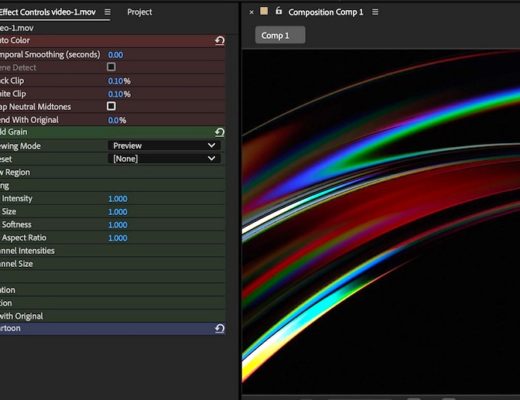
An example of what can happen when you incorrectly reconstruct the original source from interlaced video.

Video, as idiosyncratic as it is, has been around for awhile. Which is why I can’t understand it when even today, broadcast networks and now online video distributors don’t get some of the fundamental issues of video - such as how to handle interlaced fields and pulldown - right.

I can understand where people with a print, photographic or web background would be caught off guard by some of the weird special cases of video. But if your job is broadcasting or selling video…I have considerably less sympathy for you. But I’m here to help.

John Tariot of Film | Video | Digital was kind enough to forward to me this article that exhaustively compares Apple iTunes, Netflix, Microsoft Zune, Amazon VoD and Hulu and the (in)ability to properly handle video with pulldown and interlacing for web distribution. I have a couple of issues with it - the author refers to the common frame rates as 30 and 24 fps rather than 29.97 and 23.976, you’re somewhat hosed if the source was interlaced without pulldown, and I have a some sympathy for a company that is trying to build a pipeline to automatically handle progressive, interlaced, and pulldown footage (some with broken cadences) - but it is still a very worthwhile read, including the comments.

As I alluded to in my rant intro, there is a lot of material out there on how to handle video correctly. For example, Trish and I have generated a lot of material on how to deal with interlacing and pulldown, most of it available for free:

In addition to our own musings, there are other great resources available too, such as:

Now, if I could just get our local network affiliates to stop deinterlacing their still image graphics…

The content contained in our books, videos, blogs, and articles for other sites are all copyright Crish Design, except where otherwise attributed.
 

(Page 1 of 1 pages for this article )

                    Clip to Evernote


PsF’s missing workflow, Part 10:  FCP X

Allan Tépper | 03/14

How to deal with 25PsF and 29.97PsF with Final Cut Pro X

image

In parts 1-3 of the PsF’s missing workflow series, we introduced the terms benign PsF & malignant PsF, and revealed the PsF status of several AVCHD…

AJA and Sound Devices embrace Sony NXCAM’s timecode-over-HDMI

Allan Tépper | 02/29

Free firmware updates enable timecode-over-HDMI from NXCAM, but is that enough?

image

Many ProVideo Coalition readers may recall my article called Untapped features in Sony NXCAM’s new HDMI output from June 2011. At that point, I surveyed several…

PsF’s missing workflow, Part 9: Premiere Elements 10

Allan Tépper | 12/28

Despite the Premiere Elements team’s denial about the existence of PsF in AVCHD, fortunately there are workarounds to handle AVCHD PsF properly with the sub US$100 Premiere Elements in many cases.

image

In parts 1-3 of the PsF’s missing workflow series, we introduced the terms benign PsF & malignant PsF, and revealed the PsF…

You must be registered to comment. This is an effort to reduce spam. Please REGISTER HERE.

I HATE the fact that interlacing and the 1000/1001 frame rates have persisted into the HD era.

Come on! That was our big chance to rid ourselves of that idiocy!

Posted by Charles Angus  on  12/01  at  08:16 PM


I agree with you completely - HD was a chance to go to integer frame rates and all progressive scan. I’m particularly distraught that we clung into the old film production model (shoot 24, add pulldown) for HD distribution. Backward compatibility is of course important, but this was a case of fossilized practices, not best practices. Yet, here we are…

Posted by Chris Meyer  on  12/01  at  10:27 PM


And don’t get me started on the choice of 1.78:1 as the aspect instead of 1.85:1…

Posted by Charles Angus  on  12/02  at  05:33 PM


Also, I thought I’d mention that while the thumbnail for this article displays a progressive frame constructed by using two sequential fields (and therefore having lots of horizontal lines), the image in the article (which is similar) shows what looks like it might be line doubling to make a progressive image. The thumbnail image is much more arresting as a demonstration of bad de-interlacing, in my opinion…

Posted by Charles Angus  on  12/02  at  05:36 PM


Aside from wanting to grab attention, I wanted to show two sides of the problem.

Worst of all is not deinterlacing interlaced material, as shown by the thumbnail (what’s really fun is to then scale this by less than 50% - the fields get really mushed).

Second-bad - and the focus the main article I was linking to, and illustrated by the main figure up top - is to separate fields, but ignore that the source actually had pulldown, which means it was indeed possible to reconstruct sharp, whole progressive frames.

To boil down my recommendations: If it has pulldown, remove the pulldown! If it’s interlaced, separate the fields, and if possible use something like FieldsKit to reconstruct the best image you can from the remaining information.

Posted by Chris Meyer  on  12/02  at  11:34 PM


Agreed.

Thanks for the clarification.

Posted by Charles Angus  on  12/02  at  11:47 PM


I bought some video clips off iTunes from a VERY popular UK band and when I played them back they were unwatchable because no one de-interlaced it before going from 1080i > 720p on fast motion/strobe light video. I contacted iTunes and they told me that was how it looked on their file so that was “how it was supposed to look”!

frustrating! (But nice to know I know more than the people that work on some big name music projects…)

Posted by .(JavaScript must be enabled to view this email address)  on  12/03  at  01:20 PM


Sometimes it’s HARD!

A couple years ago, it took me several days of tinkering to get the right tool, and the right settings to get my 1080i30 HDV down to 720p30 for a clean Vimeo feed. “Deinterlace” in one tool is not the same as another. And the _order_ of the actions is critical (don’t downsample to 720p from 1080i and THEN deinterlace!)

Now add CMOS jellocam on top of this!

Posted by IEBA  on  12/14  at  07:40 PM


Name:

Email:

Location:

URL:

Smileys

Remember my personal information

Notify me of follow-up comments?

Submit the word you see below:


PsF’s missing workflow, Part 10:  FCP X

Allan Tépper | 03/14

How to deal with 25PsF and 29.97PsF with Final Cut Pro X

image

In parts 1-3 of the PsF’s missing workflow series, we introduced the terms benign PsF & malignant PsF, and revealed the PsF status of several AVCHD…

AJA and Sound Devices embrace Sony NXCAM’s timecode-over-HDMI

Allan Tépper | 02/29

Free firmware updates enable timecode-over-HDMI from NXCAM, but is that enough?

image

Many ProVideo Coalition readers may recall my article called Untapped features in Sony NXCAM’s new HDMI output from June 2011. At that point, I surveyed several…

PsF’s missing workflow, Part 9: Premiere Elements 10

Allan Tépper | 12/28

Despite the Premiere Elements team’s denial about the existence of PsF in AVCHD, fortunately there are workarounds to handle AVCHD PsF properly with the sub US$100 Premiere Elements in many cases.

image

In parts 1-3 of the PsF’s missing workflow series, we introduced the terms benign PsF & malignant PsF, and revealed the PsF…

PsF’s missing workflow, Part 8: ClipWrap to the rescue

Allan Tépper | 11/30

Like a bridge over troubled waters, ClipWrap will now be the cure-all for AVCHD’s multiple weaknesses for many Mac video editors, at least in the short term.

image

In parts 1-3 of the PsF’s missing workflow series, we introduced the terms benign PsF & malignant PsF, and revealed the PsF status…

To be considered for listing, contact pr (at) provideocoalition (dot) com


Copyright © 2012, HD Expo, LLC a division of Diversified Business Communications. DBA Createasphere

All rights reserved. HD EXPO, High Def EXPO, Createasphere, E-Tech, Entertainment Technology Exposition, 3D Production Workshop, VariCamp, P2 Camp, ColorCamp 101, and Lighting, Filters & Gels for HD are all trademarks of HD Expo, LLC.

Terms of Use  |  Privacy Policy

Check PageRank