

Filmtools
Filmmakers go-to destination for pre-production, production & post production equipment!
Shop NowComplaint Department, Pick a Number

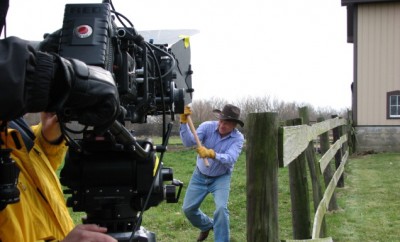
While Red was making new product announcements in November 2008, I was busy AC’ing a 10-day Red One shoot. Between takes the crew discussed the new camera and sensor options announced by Jim Jannard and Co. The ability to mix and match sensor sizes for maximum flexibility whets my appetite as a filmmaker. However, for myself and others I’ve spoken with, that excitement is tempered with a bit of cold reality. The general concensus is, “Finish the camera you promised at NAB 2007 before you deliver another line of products.” Leading up the camera department on this project and others has really driven that point home to me. Donning my flame-retardant gear, I’m going to take a few minutes and get some of these issues off my chest. Read on…
I’ll start with the positive aspects of a Red production; the sensor captures beautiful filmic video, and the camera is a relatively well-designed system that makes great images day in and day out. In general, the system is solid and well-designed. However, the problems creep into play with the details. Unfortunately, these small wrinkles tend to accumulate, and they’ll drive you mad if you are the one responsible for the camera’s daily operation.
On our cold November mornings in Chicago, most days the camera refused to boot without being reset 2-3 times. I recall one particular morning that required us to hold vehicle shots while trying to start the camera. It was the first shot of the day, and we had built up the camera and rigged the vehicle we were shooting from before booting the Red. Meanwhile, crew is standing by and the client is waiting. It was a tense moment for me and my 2nd as we reset the Red multiple times, waiting for that one magic moment when it would boot without freezing. Multiply that anxiety by the necessary 6-10 battery changes in a full shooting day (all requiring shutting down the camera), and you begin to understand why some users are frustrated by the bugginess. I know that I am. Prior to the start of principal photography, the Red was updated to Build 17, so at that time we were at the latest stable version of firmware. As I write this in mid-March 2009, the Red One stable firmware is still at Build 17. Build 18 is in Beta, and I assume that fixes are coming. And inevitably, new bugs. It is software, after all.
 For us in November, Build 17 introduced another wrinkle… 17 had a bug that makes the ability to toggle in and out of View Raw impossible after a random period of time. This was problematic for us, as the DoP had designed a preview look that closely approximated what the final film grade was to be. Toggling View Raw enabled us to quickly see what the look would be, but still monitor the Raw data being recorded at the touch of a button. This greatly simplified exposure decisions on-set. Unfortunately, Build 17 would “forget” the View Raw toggle by noon, and we’d be guessing for the rest of the day. The only workaround we were aware of at the time was to do a complete Build 17 re-upgrade on the camera. This “fix” lasted several hours before the option vanished again. Since then, I learned that there is a simpler workaround that involves re-applying the View Raw option in the menus. We had no way of knowing that at the time. However, even that is unacceptable for a camera that shipped 18 months ago. These things should work out of the box on a camera that is supposed to be production-ready. Furthermore, that brings up another side-concern…there is no one location that contains a list of Known Issues for the camera or the various firmware builds. With people being brought on to crew a Red shoot that have never worked with a Red, it’s a herculean task to get up to speed on what works and doesn’t work with the camera, and what limitations and gotchas exist. Sure there is information scattered all over the Reduser forums, but keeping on top of it all is nearly impossible.
Another bug I discovered on a recent project relates to reference audio. If you are shooting 100% sync sound and not capturing reference audio on the Red, you’ve probably never seen this error. On a recent shoot with a lot of interviews, we needed to capture reference audio to the Red. It worked fine, except that on playback most clips would fail to play, freezing with an audio error on screen. The workaround was to exit playback, and try to play the clip again. Sometimes we would do that as many as 8-10 times before the clip would finally play without error. We learned very quickly to disable audio capture when it wasn’t entirely necessary, so we could actually play back the footage for the director. This camera had not yet been sent in for the audio board upgrade, so I don’t know if that was related. But I do know that it was a very irritating, very time-consuming issue that sapped my confidence and slowed down our already compressed shooting schedule. These sort of simple details need to work every day, all day. Oh, and while we are on the subject of playback…can we have playback thumbnails already? Hitting Next-Next-Next through 50 clips so the director can look at one detail from a shot early in the day is time-consuming and feels 100% unecessary on a camera that already has a joystick thumb control.
Working with the Red on a daily basis also revealed some other fit and finish issues. At first glance, the Lemo connectors for drives, EVF, and LCD look like a great idea. They are compact and appear solid. Unfortunately, they are clunky and unreliable in actual use. The slide lock design is difficult to disengage, and our EVF plug in particular had been tweaked on a previous shoot and was notoriously unreliable. The display would turn red from time to time, requiring a repatch of the EVF cable to fix it. The LCD plug was loose on the back as well, it would wiggle about 1/4-inch when you touched it. I noted this on the November shoot. By the time the March shoot rolled around, the LCD’s plug was dying a slow death, sometimes turning green or red in the middle of a take while I’m using it to pull focus, and other times just blinking to black. The EVF wasn’t doing well in March either, sometimes it showed around 15 vertical “jailbars” across the frame, and no amount of wiggling or jiggling cords would change that. Very distracting when monitoring or rolling, though ironically somewhat helpful for checking verticals and leveling the camera. Connectors that are hardier and can handle the constant stresses of production should be standard. I shouldn’t have to buy a third-party breakout box from Element Technica just to get an HD-SDI plug that doesn’t feel like it’s going to fall apart the first time I tweak it. Because it WILL get tweaked. It’s not a matter of if, it’s a matter of when.
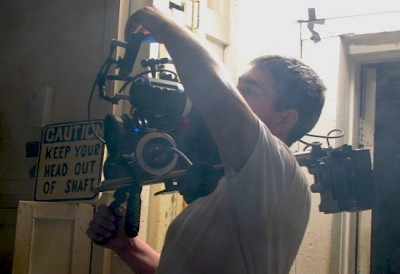 Other issues we ran into, and some of these are perhaps “normal” wear-and-tear related; when configuring the camera for a handheld shot, the Red Handle locking screw broke off while tightening the rig down. Not exactly confidence-inspiring when you are about to shoulder a 25lb rig. Thankfully the rental package included all the necessary extra screws and replacement items that made the handle repair quick and easy. The 18-50mm Red Zoom also decided to stop zooming during the November shoot. Wouldn’t push past 25mm. Thankfully we had a set of Superspeeds that basically covered that zoom range. On the March shoot the batteries stopped reporting percentages to the camera, the display would just read “DC” instead of a number showing what was left in the batt. We were able to get a good read using the hard button and 5-light LED display on the battery itself, but sometimes you’d forget to check (since it’s not in front of you on the display), and then realize right before a long take that you were at 1 or 2 bars and risking losing the camera mid-take. I don’t know if this was related to our battery plate, or what, but I do know that it was a major irritation. That sort of thing should work on a production-ready rig.
Another issue we ran into in March related to image shear. I don’t really know if that’s the right term, but that’s how I describe it. From time to time, the image would shear in half horizontally on fast pans. Like the top and bottom halves of the sensor were split apart and not in sync. This was easy to catch on motion, but sometimes surprised us on very subtle moving shots like interview setups. The fix? Reboot the camera. Again, not very confidence inspiring. Which leads me to this; it is amazing the number of times you have to reboot the camera on-set. Every time you have to make a battery change, you have to reboot. This is about once every 1.5 hours, and inevitably occurs right about the time that the director is asking to look at the frame. A boot takes about 90 seconds, assuming it boots the first time. This is a real time-waster, and I know I’m not the only AC complaining about it. In fact, I read just the other day that rental house Fletcher Chicago has implemented a dual-battery Anton Bauer Battery Mount that enables you to swap batts on the fly, no reboot required. Very useful, and something that every Red camera owner should have. They’ve also reconfigured their Red packages to be completely tool-less and supposedly better-balanced than the standard Red rails config. Bravo!
My bottom line is this; there is no doubt in my mind that the Red One is an incredible camera that has changed the game 100%. There is no question that it has started a revolution. The image quality is stellar, and it offers so many options to creatives. All the “big” things are there. Where it falls all over itself is in the little things, the tiny details that nag you daily and require countless workarounds. Is it worth it? Probably, particularly if you are on a tight budget. Should we have to put up with these constant workarounds and gotchas? No. This camera is supposed to be production-ready. I realize that perhaps some of these issues are probably just our bad luck with this particular camera, but there are too many things broken to just dismiss as such. Audio and playback should work out of the box. The camera should boot the first time, every time. Connectors should be hardened and able to withstand normal production use. New “stable” firmware builds should not break basic functionality, and if they do, stable build fixes should be out within weeks, not months. It’s not asking too much for the camera to work every day, as designed. Particularly when it has been marketed as a working production solution.
When you are on-set on a tight time and money budget, you need every advantage you can get to complete the shooting day on schedule. Fighting the camera all day long is not conducive to that end goal. A production camera is a system, and all it’s parts should be working together without fail on a daily basis. A production-ready camera must be so much more than just a great sensor.
I welcome your comments, workaround suggestions, and flames. Login and comment below.