
(Page 1 of 1 pages for this article )

Friday, December 04, 2009

Filed under: CamerasTips

DSLR Video and Aliasing Artifacts

Matt Jeppsen | 12/04

V-DSLRs, OLPF, and hoity-toity French words

image

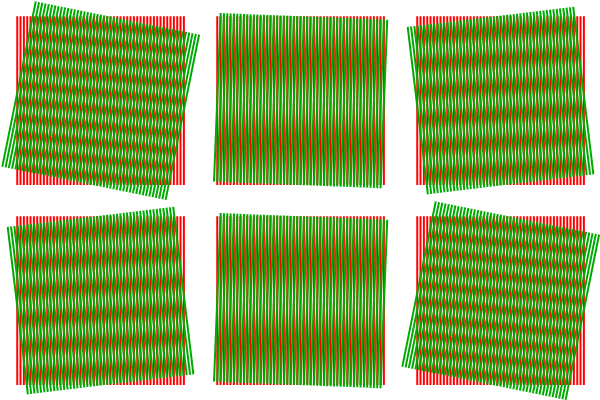
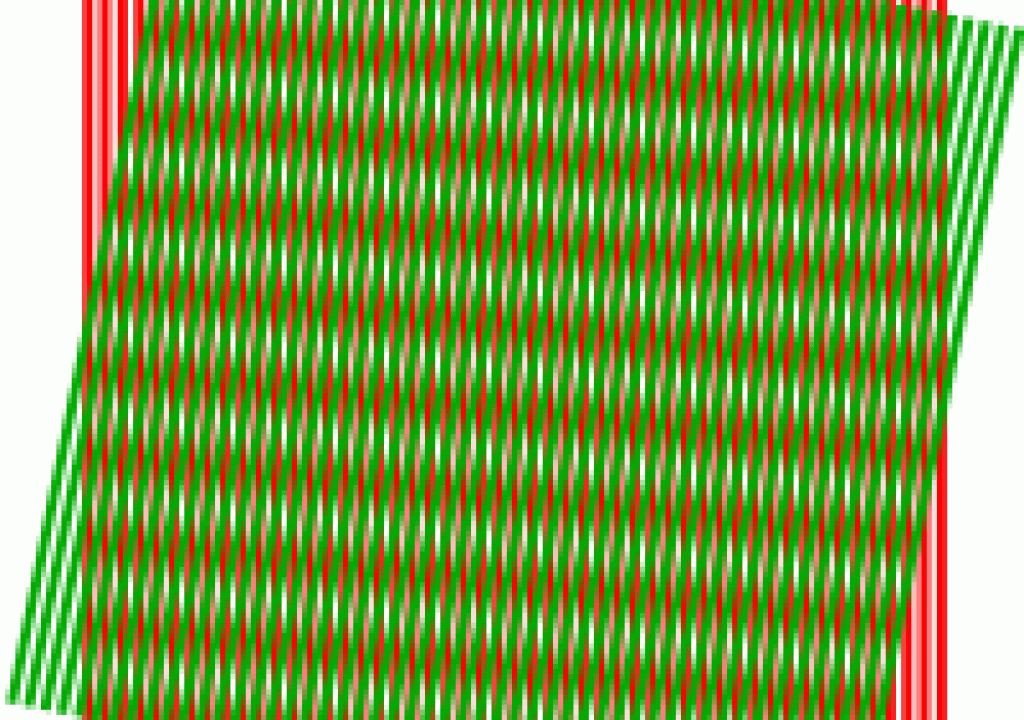
If you are shooting video with one of the hot new DSLRs, you are probably aware of the aliasing issues found in some of your footage. If not yet, you will at some point. Just keep shooting, it will show up. Fine detail aliasing has always been an issue for any camera system, but it’s particularly prevalent in DSLRs as they lack an Optical Low Pass Filter (OLPF) that is specifically tuned for video. In the case of the 5D & 7D, engineers at Canon have also chosen to sample a limited number of lines from the image sensor to downsample to 1080p. This is quick solution, but not the highest quality way of doing things; it creates aliasing image artifacts, and reportedly limits the resolution of the cameras at around 720p. It’s almost as if these tools were primarily designed as still cameras! How strange. At any rate, I’ve learned to warn my clients before interview shoots not to wear shirts with fine detail patterns, as they will moiré faster than you can say “how the hell do you pronounce that word?”

Funny side note…when written moire, it’s pronounced “mwahr.” Moiré with the French accent aigu mark is pronounced “mwahr-AY.” The more you know, right? I personally prefer mwahr-AY. Sounds more like a real word. I like it so much that back on Oct 30 when Red did their traditional biennial Fall Scarlet schedule update, I wrote a little poem about DSLRs and aliasing…

“Compression is ugly

My DSLR will moiré

If you logged on for Scarlet

You’ll be dissappointed today.”

And that’s why I’ll stick to writing about geeky video topics instead of prose. But I digress…what were we talking about?

Ah yes, moiré and DSLR video. So over at DVXuser Barry Green wrote a detailed article on moire and how it affects DSLR video. If you aren’t familiar with the topic, it’s a great article to get you up to speed. Stu Maschwitz also has a few words on the subject at ProLost, offering his perspective (which mirrors my own take on the subject). And finally, No Film School just posted a few thoughts as well, putting the issue in perspective similar to how Stu approaches it. So there you have it. A veritable roundup of moire info and opinions. Or moiré, if you drink your tea with a dainty pinky extended like I do.

So in conclusion, be aware of your gear’s limitations and take steps to work around or avoid those issues. Just like you always have. Happy shooting!


UPDATE: I somehow missed this thread over at Reduser about 7D Zone Charts, and the comparison to Red One Zone Charts. There’s a lot of insight into DSLR aliasing issues in that thread from imaging genius Graeme Nattress. A must read. Favorite quote from the thread: “When two sets of lines cross to form weird designs, That’s a moiré.” I was pleasantly surprised in reading the thread to see most Redheads actually putting the camera comparisons in proper perspective…understanding that the 5D/7D are flawed, yet still useful tools, and that they have a place in the market.

(Page 1 of 1 pages for this article )


                    Clip to Evernote


Gear In 60 Seconds – Nauticam NA-60D

Matt Jeppsen | 02/09

Getting watery trick shots with this DSLR housing

image

Here’s another FreshDV Gear in 60 Seconds video, on the Nauticam NA-60D housing for…

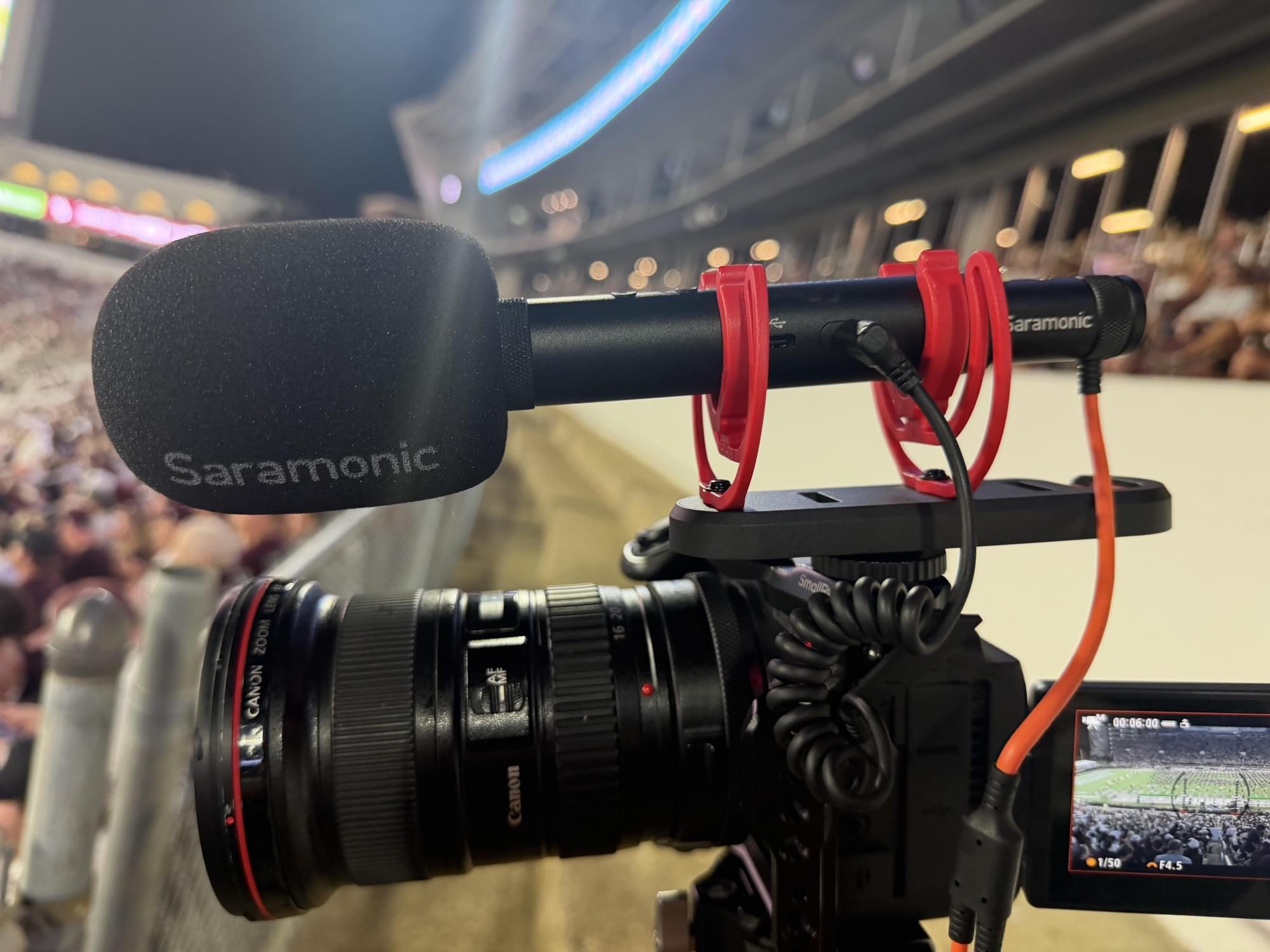
Redrock Micro’s ultraCage for the C300

Clint Milby | 02/07

New Cage Fits New Camera Like A Glove

image

At the 11th Annual San Francisco SuperMeet, I was able to actually lay hands on the

DP Alex Buono Talks C300 At SF SuperMeet

Clint Milby | 01/31

SNL Veteran, Talks About Using the C300 For Network Television…

image

Recently I attended the 11th annual San Francisco Supermeet. Beyond some great lectures by some great speakers, there were a variety of different hardware manufacturers and software companies to…


You must be registered to comment. This is an effort to reduce spam. Please REGISTER HERE.

This explanation of DSLR video’s aliasing doesn’t seem to hold up.

The HD-sized images from these cameras are being downsized from a vastly larger frame; any aliasing due to the chip and its OLPFs would occur at the native resolution of the chip.  Resizing it down to HD resolution would vastly reduce (if not totally obliterate) this extremely fine aliasing.  In contradiction to his conclusions, Barry Green says the same thing in the linked article:

“...since web video is frequently scaled down in size (and scaling down helps to reduce aliasing artifacts) they released the 5D Mk II as-is…”

Scaling an image larger than 5000 x 3000 down to 1920 x 1080 should not result in more aliasing than a full-sized still.  And 1280 x 720 should look smoother still.  But in fact we don’t see that at all; most people think the 720 footage looks MORE aliased (although that’s probably because they’re blowing it up to the same size as the 1080 for viewing).

The aliasing in DSLR video almost certainly comes from one thing: a fast and crappy resizing algorithm.  What happens if you resize an image with no resampling?  Try it in your favorite image-editing program.  The result: wretched aliasing.

To achieve the necessary processing throughput to deliver “HD” video, these cameras are taking shortcuts.  They’re not downsampling the images well, and the result is aliasing galore.  They may even be doing some abbreviated deBayering to speed things up.  It almost certainly has nothing to do with optical low-pass filters, guys.

Posted by .(JavaScript must be enabled to view this email address)  on  12/09  at  03:13 AM


MobiusStrip and the aliasing article are both half right.

The article is correct that the problem is the lack of a low pass filter.  But it fails to note that the low pass filter could potentially be applied to the digital data (software) and need not be applied optically at the sensor level.  At least that is a possibility if the camera uses all of the sensor data and then resamples a full frame to HD resolution.  So it is quite possible - at least from an information theory standpoint - to have the DSLR highly optimized for still and video.  The question is how fast the sensor can offload data and how fast the camera can run it through a low pass (blur) digital filter.

MobiusStrip is quite possibly also correct in attributing the issue to how the image is resampled.  This is correct if the camera actually uses a full sensor frame of information and then resamples it. But for all we know, the camera may be taking every other line or every third line of image detail from the sensor and tossing out the in-between lines.  If that’s the case, then better resampling or software based low pass filtering will not be helpful. In this case the aliasing is introduced at capture and once introduced, aliasing cannot be removed without removing HUGE amounts of image detail.

The author of the article mentioned slightly soft focus to combat aliasing.  Two other things that might be worth trying are to use lenses that aren’t inherently sharp to begin with - like some third party generic brand glass - or to use very small apertures that introduce softening due to diffraction.  The other end of that scale is to use a fast lens wide open which tends to yield softening due to lens aberrations.  Most still camera lenses are significantly compromised for sharpness (there are eceptions) when shot wide open.

Posted by Jay Turberville  on  12/10  at  05:46 PM


Even with a “fast and crappy resizing algorithm” these cameras overheat. If they resized correctly they would turn down three seconds after you pushed record. These cameras are not intended for video. They have no decent ventilation. The cheap T2i even has a plastic body, which does not help. It is a known fact that the 7D with its metal body does not lock up as quickly, because the body dissipates heat better. For video these cameras need ventilation holes and maybe even a fan, like Panasonic did on its 60p consumer models. This, and less power-hungry chips, and then Canon et all will be able to improve filtering, scaling and encoding.

Posted by .(JavaScript must be enabled to view this email address)  on  08/27  at  06:21 PM


Wrote something about how the Canon do their line skipping a while back as well - check it out:
http://ninofilm.net/blog/2010/04/26/full_hd_crop_zoom/

Posted by Nino  on  08/28  at  12:44 PM


Name:

Email:

Location:

URL:

Smileys

Remember my personal information

Notify me of follow-up comments?

Submit the word you see below:


Gear In 60 Seconds – Nauticam NA-60D

Matt Jeppsen | 02/09

Getting watery trick shots with this DSLR housing

image

Here’s another FreshDV Gear in 60 Seconds video, on the Nauticam NA-60D housing for…

Redrock Micro’s ultraCage for the C300

Clint Milby | 02/07

New Cage Fits New Camera Like A Glove

image

At the 11th Annual San Francisco SuperMeet, I was able to actually lay hands on the

DP Alex Buono Talks C300 At SF SuperMeet

Clint Milby | 01/31

SNL Veteran, Talks About Using the C300 For Network Television…

image

Recently I attended the 11th annual San Francisco Supermeet. Beyond some great lectures by some great speakers, there were a variety of different hardware manufacturers and software companies to…

Book Review: “The DSLR Filmmaker’s Handbook: Real-World Production Techniques”

Jeff Foster | 01/22

By Barry Andersson and Janie L. Geyen

There’s little more popular these days than being a budding Indie filmmaker slinging a 5D MkII over your shoulder and firing off hours of footage that you can then spend months editing to make your masterpiece come alive! The biggest problem is that MOST folks entering this endeavor are totally…

To be considered for listing, contact pr (at) provideocoalition (dot) com


Copyright © 2011, HD Expo, LLC a division of Diversified Business Communications. DBA Createasphere

All rights reserved. HD EXPO, High Def EXPO, Createasphere, E-Tech, Entertainment Technology Exposition, 3D Production Workshop, VariCamp, P2 Camp, ColorCamp 101, and Lighting, Filters & Gels for HD are all trademarks of HD Expo, LLC.

Terms of Use  |  Privacy Policy

Check PageRank