

Filmtools
Filmmakers go-to destination for pre-production, production & post production equipment!
Shop NowEye-tracking study provides data on where viewers look when watching a film

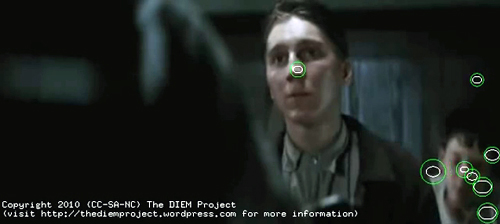
This new study by David Bordwell provides fascinating data on where viewers look when watching a film. Researchers used infrared pupil tracking to correlate attention to what was happening in the film, and their findings will surely be of interest to DoPs, Directors, and Editors alike…
“…analysis of how the staging in this scene tightly controls viewer attention was spot-on and can be confirmed by eyetracking. At any one moment in the scene there is a principal action signified either by dialogue or motion. By minimising background distractions and staging the scene in a clear sequential manner using basic principles of visual attention, P. T. Anderson has created a scene which commands viewer attention as precisely as a rapidly edited sequence of close-up shots.
The benefit of using a single long shot is the illusion of volition. Viewers think they are free to look where they want but, due to the subtle influence of the director and actors, where they want to look is also where the director wants them to look. A single static long shot also creates a sense of space, clear relationship between the characters, and a calm, slow pace which is critical for the rest of the film. The same scene edited into close-ups would have left the viewer with a completely different interpretation of the scene.”
I highly recommend that you take the time to read the full analysis with supporting video and screencaps. It’s a fascinating bit of research that greatly informs cinematography and editing techniques.
There’s also another incredibly in-depth read, a PhD thesis by Tim J. Smith entitled An Attentional Theory of Continuity Editing that is like editing 101 manna from heaven. There’s a blog post on the thesis here, and here’s the link to the 300+ page PDF. It is a long, and awesome read. Seriously, if you are an editor or want to be one, read this.
“This is an excerpt from There Will Be Blood (Paul Thomas Anderson, 2007). 11 adult viewers were shown the video and their eye movements recorded using an Eyelink 1000 (SR Research) infra-red camera-based eyetracker. Each dot represents the center of one viewer’s gaze. The size of each dot represents the length of time they have held fixation.”